Dan Nagler | Co-Founder, Your Dog Is Bored
Dan Nagler spent years doing fractional BD for other pet brands before building one himself: a deck of activity cards aimed squarely at the 7 pm zoomies. One lunch with SodaPup's CEO turned into a campaign that moved nearly 700 decks with no marketing spend behind it. He walks through the local-store validation, why an analog product beats another app, and the inventory math he is sweating heading into SuperZoo.
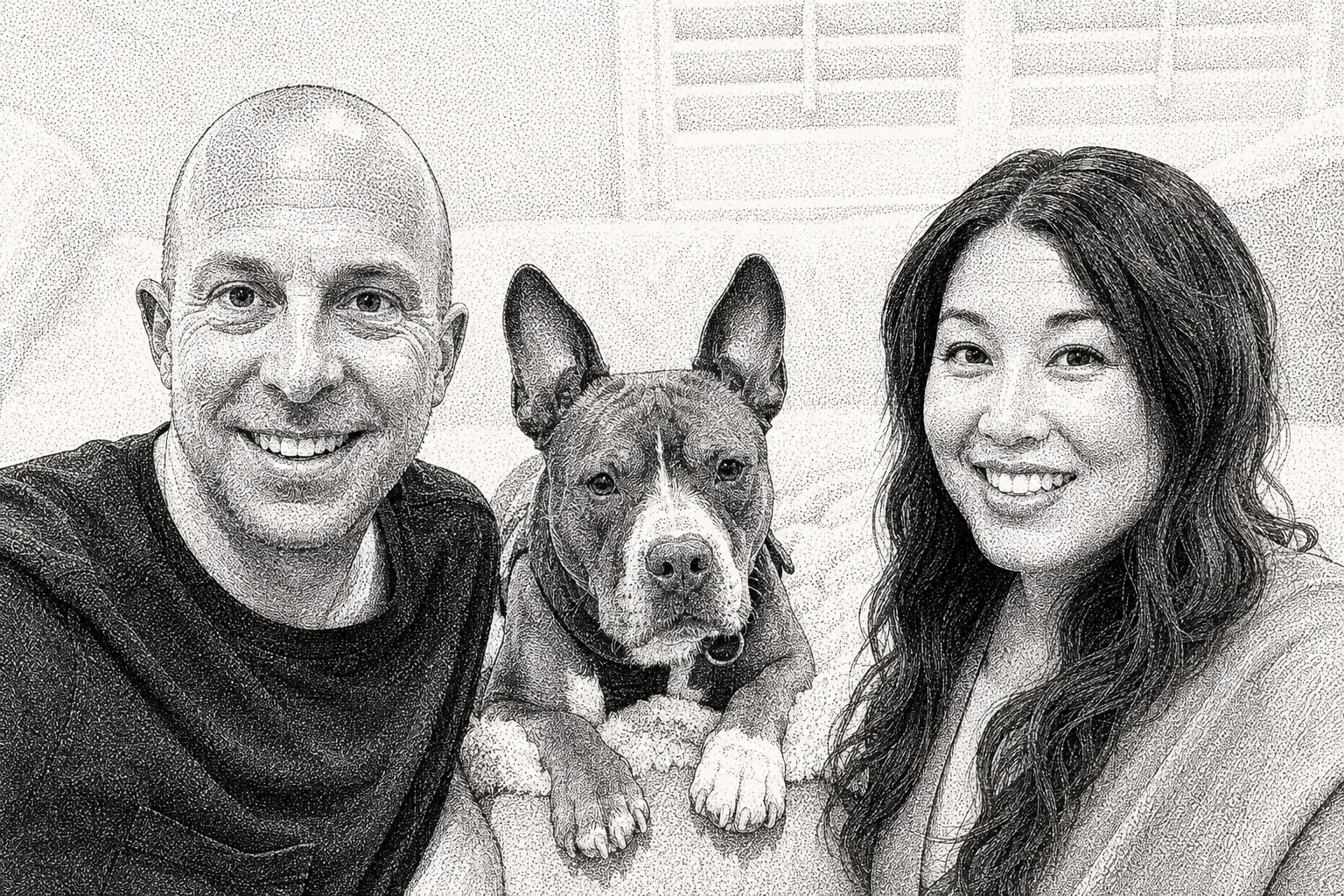
Your Dog Is Bored started with a pretty simple problem. Dan Nagler and his wife, Celeste, kept finding themselves asking the same question: our dog has energy... now what? That idea turned into a deck of activities that's quickly gaining traction with pet parents, retailers, and creators. We caught up with Dan to talk about where the idea came from, the early momentum, and what he's learned (and is still learning) since launching.
You've spent years helping other pet brands grow through Sniffworthy Labs. At what point did you decide, "I want to build something of my own," and what gave you the confidence to make that leap?
It built up slowly, then all at once. I spent years in BD and partnerships at consumer brands like Shutterfly and Adobe, along the way attempted our first startup, a mobile app for endurance athletes, then finally went out on my own doing fractional BD work for pet brands after the unexpected passing of our dog Wally. Through that work, and through the recent launch of Sniffworthy Labs, I kept sitting across from founders or marketers with the same problem: a good product, but to get it in front of the right consumer at the right time, they faced high CAC's.
Somewhere in that stretch, I noticed the same gap in our own house. My wife Celeste and I have had three very different dogs, and with our last two, Wally and Mochi, most days we'd run into the 7 pm zoomies. We would be standing there knowing our dogs needed something, with no fast answer for what. At some point it felt like a problem worth solving.
Given my background and our prior experiences, it gave us confidence to build a product like Your Dog Is Bored - it was a new challenge, a chance to help so many other pet parents, and aligned with our love of dogs.
One of your first big wins was partnering with SodaPup. How did that relationship come together, and what did having an established brand believe in your product so early mean for you?
It came together over pizza, perfect for two folks originally from the East Coast. Adam Baker, SodaPup's CEO, is a fellow Colorado founder, and he responded to my email to meet. I brought the one-pager to lunch mostly to get his read on it. He looked at it, said SodaPup's audience would be a good test to see how consumers felt about it, and kindly offered to help us fellow entrepreneurs.
What that meant to me is hard to overstate. SodaPup didn't need a case study or a pitch deck from me first. Their CEO looked at the mock-up and made the call himself. For a brand-new company, that kind of direct, personal backing from someone running a national brand is not something you can manufacture. It also confirmed something I'd believed from the Sniffworthy Labs side of my work: the fastest way for a small brand to earn trust is to earn it from one person willing to vouch for you, not from a bigger ad budget.
What made you believe there was a real opportunity here?
Again, it started with our own dogs, honestly, before it was ever a business idea. Celeste and I were living the problem every day with Wally and Mochi, and Celeste was also deep in pet content online, watching how much of the internet is built around dog parents trying to figure out the same thing we were.
The moment it clicked for me was in a local pet store. I came across a birthday product for dogs, something small and a little silly, and it landed differently than I expected. It made me think about how far pet parents have come in treating their dogs like family members, not just animals to feed and walk. That humanization trend is real, and it's still growing.
At the same time, I kept seeing the broader pull toward doing things offline and being present, away from a screen, especially with the people or pets in your life. And even with pets more humanized than ever, almost everything on the market is still built for the dog. The treats, the toys, the gadgets. There's nothing built for the parent to actually do with their dog. A card deck sits right at that intersection. It's tactile, not digital. It's dead simple. It's the kind of thing that's genuinely fun to film and share, which matters more now than it used to.
Once I saw those things stacking on top of each other - the humanization of pets, the pull back toward analog moments, the gap in products made for the parent, and how naturally shareable the format could be - it stopped feeling like a hunch and started feeling like a real opportunity.
You've only been live for a short time, but you've already had retailers reorder, videos take off on TikTok, and one of the bigger players pick up the product. What's surprised you most about the launch so far?
First, we agreed with SodaPup to initially set aside 50 decks for the campaign - Adam's post and a customer's post have taken off a bit, and they've sold nearly 700 (and counting). The pace and continued acceleration, with no other marketing, has surprised me!
Next, the customer reactions and the online comments. Most everyone gets it, the name makes them smile, and they tell us how much they could use this. Genuinely surprised at all of the positive feedback.
Lastly, I've also been surprised by how fast this can move once one partner says yes. The SodaPup content didn't just drive sales; it opened conversations with other brands and retailers who'd seen it and wanted to talk. That compounding effect happened faster than I expected. And we have Adam at SodaPup to thank for a lot of that.
Now that the product is in customers' hands, what's some feedback you've received that's already influenced the way you think about the customer experience or the future of the product?
So far, it aligns nicely with a lot of our hypotheses, which is kind of surprising. We had a vision for other variations, and now, the feedback is saying, what about a version for X or Y and validating those use cases. So it's accelerating our product development and rollout timelines. We're also realizing there are different types of buyers, some who are addressing a pain point or dog behavior (anxious, reactive, high energy, etc), and others who just want to have more meaningful interactions with their dogs. It really is beneficial for all dog parents, and so we plan on being mindful in our messaging to meet the owners and the pups where they are.
Your Dog Is Bored is a pretty unique idea. Was there an early moment, a customer, retailer, manufacturer, or even a conversation, where you thought, "Okay, I think we're onto something here"?
Two moments stand out:
The first was a local pet store. I'd sketched out a rough mockup of the deck on a piece of paper and brought it in the next day. Niki, the store manager, loved it right away and pulled her whole team over to look. Everyone loved it. We shared thoughts on pricing and nearly all landed in the same range. Then someone on staff said she'd buy 25 right now, just for gift giving. That one comment stuck with me. It wasn't just "this is cute," it was someone already picturing exactly how she'd use it. That conversation, and a few others like it, is what pushed us to actually design the product and move toward production.
The second was a cold call with a former retail executive from the pet industry. Within the first ten minutes of the call, she said this was a great fit for [a major retailer] and that she wanted to connect me with their buyer. She made the introduction three minutes after we hung up. I've been on enough calls to know the difference between polite enthusiasm and someone acting on genuine conviction. That was the second one.
This is a product that's incredibly easy to demonstrate. How important do you think creator content, UGC, and short-form video will be to the brand as you continue to grow?
It's central to how we think about growth, not an add-on. The product was never going to win with a polished ad campaign. It wins when someone pulls a card, does the activity, and films their dog's reaction, because that's genuinely the most interesting part of the product. We've built the brand's early growth with no marketing and almost entirely around that format. So we're now thinking about creators, partnerships, and a TikTok Shop presence built specifically around that behavior. All coming soon!
The part we try to stay disciplined about is not mistaking a good video for proof of a lasting business. A creator format gets you attention. Repeat purchases and retail reorders tell you whether that attention turns into something durable.
Once you had the idea, what were those first few months actually like? Walk us through designing the product, finding a manufacturer, testing the concept, and figuring out whether people would actually buy it.
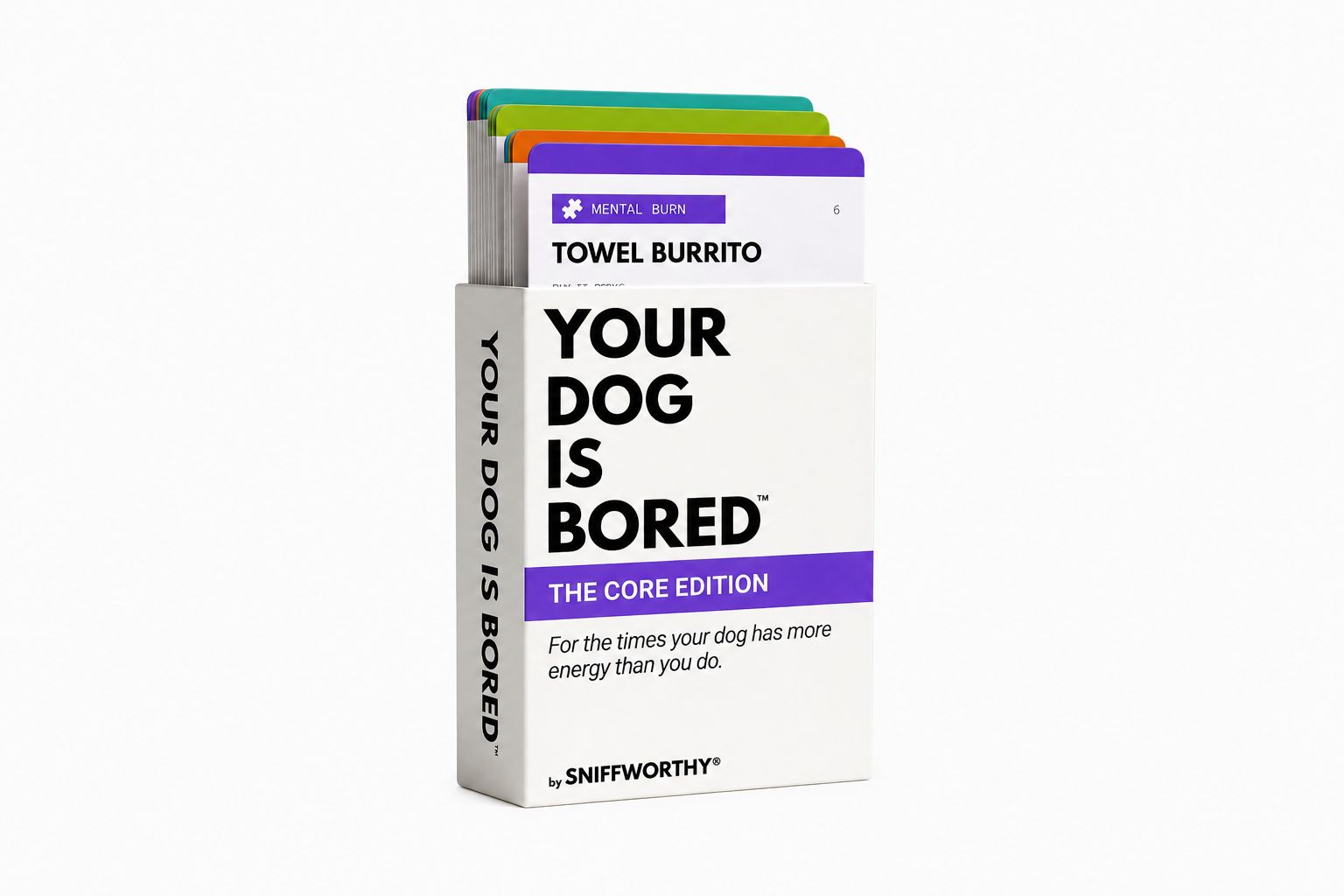
The first version of the deck came from things we had naturally gravitated to online, activities Celeste used with Wally and Mochi. We expanded our thinking from there, and sorted them into what eventually became four categories: mental engagement, physical activity, safe destruction, and decompression. She's always had a good eye for curation and what resonates with consumers. Getting from that list to a real product meant a lot of back and forth with a manufacturer on card stock, finish, and durability, since the deck needed to survive being handled by an actual dog owner mid-activity, not just look good in photos.
We soft-launched in May with a modest first run, mostly to see if the product would sell without a big push behind it. After friends and family, it started selling through, with trainers and stores buying 6 or 12 units at a time. Our first retail partner sold a dozen in 3 days. And when we walked into other local stores in Denver, they would buy on the spot and had customers who also bought with us still in the store.
This was one of the first real signals that the idea worked outside our own household. Everything since then - the SodaPup collaboration, the additional boutique relationships, the upcoming retailer launch - has been about proving that signal wasn't a fluke.
As you head into SuperZoo, what are you hoping retailers, brands, and potential partners walk away thinking after they see Your Dog Is Bored?
I don't want them to walk away thinking "that's a fun deck of cards." I want them to walk away thinking about where it fits into what they're already doing. For a retailer, that means seeing something that sells itself on the shelf and gives people a reason to come back for more cards, and for the other enrichment products they carry. For a brand, I want them to see what SodaPup saw: a low-lift way to create content that's genuinely engaging for their pet parents.
From there, we can build custom activity cards and content designed around a specific partner's products when the fit is right. Imagine a partnership with a lick mat company, a treat brand, or a toy maker, where the content and activities are developed specifically around how customers actually use that partner's product.
For potential partners more broadly, I want the conversation to be less "here's our new product" and more "here's what we're already seeing, and here's where you might fit into it." I'm also thinking ahead to Q4. The deck works well as a low-cost gift-with-purchase or even as co-branded content in packages that ship, so I'm curious to see where those conversations go.
Right now, what keeps you up at night? What's the biggest challenge you're working through at the moment?
Inventory timing, honestly. We're nearly sold out of current stock heading into SuperZoo, with a restock landing right around the show. Getting that timing wrong, either running out in front of retailers and press or sitting on too much inventory after a slower month, is the kind of problem that's boring to explain but genuinely stressful to manage.
The bigger, less tactical version of that question is how many partnerships I can take on at once without diluting any of them. Custom content works because each partner gets something that feels specific to them. The more of those relationships we take on, the harder it gets to keep that promise. Figuring out where that ceiling is, before I hit it the hard way, is probably the thing I think about most.
We didn't set out to have all the answers before SuperZoo. We set out to build something people actually reach for, and to be honest about what we still don't know.
Different parts of the market seem to understand the product for different reasons. Consumers see something to do with their dog. Creators see demonstrable content. Retailers see a compact, easy-to-explain product. Gift stores see a recognizable dog-parent gift. Partner brands see a way to increase usage of their existing products.
Sometimes it's the simple things that resonate the most, and that's what we hope people walk away thinking too.
Other Interviews
More conversations with founders, operators, and investors building the future of pet care.

Tessa Olson | CEO, COVE Animal Health
Tessa Olson's family spent nearly 90 years building Pieper Veterinary into a Connecticut institution. She rebranded it as COVE Animal Health and scaled it into a 20-hospital network across five states, backed by Chicago Pacific Founders. She explains what she screens for before a hospital joins, and where consolidation hollows a good practice out.

Three Founders. One Cohort.
Hundreds of startups applied to Pawsible Ventures' first venture studio cohort. Three of the founders who made it explain what actually got them in. Ana Malhotra on pivoting from Rome to Tato after watching a private dog park hand-check vaccine records every day, and on 65,000 pets already in the system. Lauren Burrows on the prelaunch deposits that proved Charlie Pet Health was more than a good idea, and a four-city expansion across the US and Canada. Davide Confalonieri on bootstrapping Lab4Paws through several pivots, and why execution, not the idea, was the deciding factor.

The Realities of Running a Small Pet Business
Three founders running very different service businesses - dog walking, pet transportation, and dog training - break down the operating detail most founder interviews skip. Joseph Merrill on why Hamilton Bark pays walkers hourly, moved clients to prepaid subscriptions, and built its own software rather than renting margin from Rover. DeAnna Andrews on why refusing to expand beyond transport made The Pet Taxi referable, and how veterinary partnerships became 40 percent of revenue. Emily Stoddard on narrowing services and buying a brick-and-mortar facility after nearly 18 years.