
The $1,700 Dog Ownership Gap: Why Regional Cost Data Should Shape Your Pricing Strategy
New MetLife data reveals a $1,700 gap in annual dog ownership costs between the cheapest and most expensive U.S. states. The surprise: services like dog walking, not products, drive the variance. Here's what that means for pet industry pricing strategy.
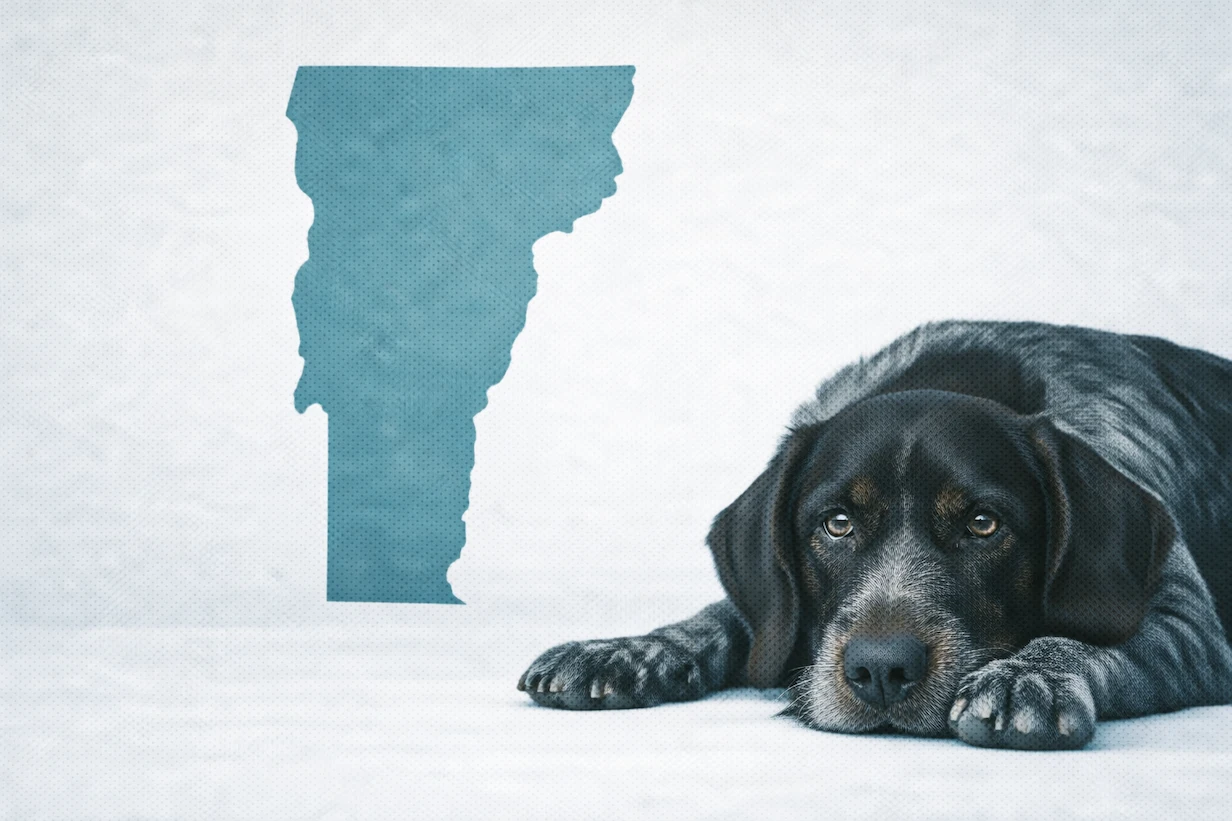
New MetLife data reveals that owning a dog costs anywhere from $2,700 to $4,405 per year depending on the state. For pet services operators, the takeaway isn't consumer sticker shock. It's that services, not products, drive the geographic spread, which means pricing power varies dramatically by market.
What Happened
MetLife Pet Insurance published a 50-state analysis of annual dog ownership costs, measuring six categories: food, veterinary care, grooming, pet insurance, dog walking, and licensing fees. The national average lands at roughly $3,200 per year.
California tops the list at $4,405, followed by Washington ($3,897), Vermont ($3,674), Hawaii ($3,622), and Massachusetts ($3,611). Montana is the cheapest at $2,700, followed by Mississippi ($2,742), Iowa ($2,872), Nebraska ($2,890), and Oklahoma ($2,907).
The gap between the most and least expensive states exceeds $1,700 annually. But the surprise is where that gap comes from. Dog food costs vary modestly, ranging from $487 in Montana to $533 in Washington. Veterinary care shows a similarly narrow band, from $261 in Mississippi to $339 in California. The real driver is dog walking, where annual costs range from $1,440 in Montana and Mississippi to $2,950 in California. That single category accounts for the vast majority of the state-to-state variance.
MetLife used regional price parities from the U.S. Bureau of Economic Analysis to adjust costs across states, and incorporated state-level sales tax where applicable.
Why It Matters
The consumer headline writes itself: California is expensive, Montana is cheap. But for pet industry operators, this data reveals something more useful about where pricing power exists and where it doesn't.
1. Services drive the gap, not products. Dog food and veterinary care costs are remarkably consistent across states. The $46 spread in food costs (Montana to Washington) is noise. The $1,510 spread in dog walking costs (Montana to California) is signal. For anyone building or scaling a pet services business, geographic pricing strategy isn't a nice-to-have. It's fundamental to unit economics.
2. Dog walking dominates the cost stack. At $1,440 to $2,950 per year, dog walking represents roughly 53% to 67% of total ownership costs depending on the state. That makes it the single largest spending category for dog owners, outpacing food, vet care, grooming, and insurance combined. This is why platforms like Rover and Wag have attracted venture capital: the addressable market is enormous, and the price points support meaningful margins in high-cost metros.
3. The affordability squeeze is accelerating. Nearly half of pet owners report spending as much or more on their pet's healthcare as their own, according to a LendEDU survey of 1,000 pet owners. Meanwhile, veterinary services inflation has been running at 7.8% year-over-year, and more than half of pet owners report increased spending on vet care compared to 2021, according to Petfood Industry. This cost pressure is creating demand for financial products (pet financing, insurance, wellness plans) and pushing some owners toward trade-down behavior in discretionary categories like grooming and premium food.
4. Regional cost data informs market entry. For operators evaluating expansion, this data offers a rough proxy for willingness to pay. High-cost states like California and Washington correlate with higher household incomes and established consumer expectations for premium services. Low-cost states may offer less pricing headroom but also less competition and lower operating costs. The right strategy depends on whether you're selling a premium service or competing on value.
The pet insurance component of the data deserves separate attention. Annual pet insurance costs range from $167 in Mississippi to $217 in California, a modest $50 spread that reflects the industry's still-nascent penetration. The U.S. pet insurance market, valued at roughly $5.1 billion in 2024, is projected to reach $25 billion by 2033. As penetration grows, insurance coverage will likely dampen some of the regional cost variance in veterinary care while simultaneously raising the floor for what services pet owners access, and the volume of claims veterinary practices process.
What to Watch
Services pricing as a competitive moat. As national pet services platforms scale, the question is whether they'll standardize pricing or lean into regional variation. The MetLife data suggests the latter is more defensible. A flat national rate for dog walking would either leave money on the table in California or price out customers in Montana.
Cost pressure driving consolidation. Rising ownership costs are squeezing independent operators, particularly in grooming and dog walking. Expect continued platform aggregation as consumers gravitate toward convenience-driven marketplaces that offer transparent pricing. The operators who survive independently will be those with strong local brand equity in high-cost markets where premiums are sustainable.
Pet financing as an emerging category. With ownership costs exceeding $3,000 annually and veterinary inflation outpacing general CPI, the market for pet-specific financial products is expanding. Snout's recent $110M raise to finance vet bills signals investor confidence that cost pressure will drive adoption of financing and buy-now-pay-later products in pet care.
Track the MetLife study as an annual benchmark. The year-over-year trajectory of these cost categories, particularly the services-versus-products split, will signal whether the pet economy is becoming a services story or remains a product-driven market.
Related Analysis
Source: The Most Expensive States to Be a Dog Owner via MetLife Pet Insurance
Other News
More stories shaping the pet industry this week. From funding rounds and product launches to regulatory shifts and retail strategy, stay ahead of what's driving the market.

Senior Pets Are 44% of the Market. They Just Got Their First Conference.
Senior Pet Con, the first event built specifically for senior pets, launches September 12-13 as a two-day virtual conference, one day for pet parents and one day of RACE-approved CE for veterinarians. With senior animals at 44% of the U.S. pet population and sponsors like Virbac, Purina, and Loyal Animal Health backing it, the launch signals that senior care is becoming its own commercial category.
Outward Hound Gets Its Third Private Equity Owner as H.I.G. Takes Control
H.I.G. Capital took majority control of Outward Hound's seven-brand platform, its third PE owner in under a decade and a sign the M&A thaw reached hard goods.

Pet Care's Loyal Customers Hide a Harder Truth: Owners Aren't Paying Themselves
A new benchmarking survey of 457 pet care operators shows a segment with loyal customers and steady growth but chronic under-monetization, low occupancy, thin upsells, and owners who often aren't paying themselves. The "room to scale" story is also a survival story.