
Dutch Recruits Tara Lipinski as "Chief Pet Officer" to Push Access Narrative as Vet Costs Bite
Dutch named Olympic champion Tara Lipinski its Chief Pet Officer, tying the move to a Pet Care Gap Report claiming 75 million Americans skip vet care.

Dutch, the veterinary telemedicine platform, named Olympic champion Tara Lipinski its Chief Pet Officer on April 9, tying the celebrity announcement to a new Pet Care Gap Report claiming 75 million Americans have skipped or declined vet care due to cost or access. The framing is the real story: Dutch is positioning itself as the affordability play in a category where the cost gap has become the dominant operator narrative.
What Happened
Dutch announced on April 9 that figure skater Tara Lipinski, a two-time Olympic medalist and existing brand partner, is taking on the role of Chief Pet Officer. The title is honorary rather than operational. Lipinski's mandate is to amplify Dutch's Pet Care Gap Report and front awareness campaigns around affordable virtual veterinary care.
The Pet Care Gap Report, released alongside the partnership, pegs the access problem at 75 million pet parents who have skipped or declined vet care due to cost or geographic barriers. The figure builds on Dutch's earlier research finding roughly 129 million Americans, about 38% of the population, live in what the company calls "veterinary care deserts," areas without accessible, affordable, or available pet care.
Lipinski told People in an exclusive interview that she relied on Dutch after being displaced by the L.A. wildfires, using the service to manage her dog Sullivan's anxiety when her regular vet wasn't reachable. "I am a crazy dog mom," she said, framing the personal use case that Dutch is now packaging into its marketing play.
Dutch was founded in 2021 by Joe Spector, a Hims & Hers co-founder, and has raised approximately $43 million across seed, Series A, and a 2023 Series B from Forerunner Ventures, Eclipse Ventures, Bling Capital, and others. Its membership starts at roughly $11/month for annual plans, covering unlimited video and chat consults for up to five pets across 150 common conditions. The company has layered distribution partnerships with PetMed Express and a pet insurance product built with Pets Best under parent Synchrony.
Why It Matters
A celebrity ambassador deal normally isn't news. This one is, because of what it signals about positioning in a category where the affordability gap is becoming the defining operator narrative.
1. Dutch is planting its flag on access, not convenience. Early vet telehealth pitches sold convenience: skip the clinic, stay home, faster answers. Dutch's Pet Care Gap Report deliberately reframes the category around affordability and rural access. That's a more defensible moat than convenience, which every clinic with a Zoom link can now match. It's also the narrative veterinary operators have been losing ground on as vet services inflation runs at 7.8% year-over-year and more than half of pet owners report skipping care due to cost.
2. The 75 million number is marketing, but the trend it surfs is real. Dutch's figures should be treated as company-sourced advocacy, not independent data. But the underlying dynamic of pet owners priced out of traditional vet care is the same trend that justified Snout's $110 million capital raise in January to finance vet bills via no-credit-check wellness plans. Two different business models, same bet: the affordability gap is where the growth is. Operators competing in wellness plans, insurance, DTC pharmacy, and telehealth are now fishing in the same pond.
3. Celebrity naming inflation signals category maturity, not novelty. Lipinski's "Chief Pet Officer" title follows a pattern across consumer categories. Brands stop pretending celebrity partnerships are collaborative and start packaging them as executive fiction because the celebrity itself is the strategic asset. Dutch doesn't need Lipinski's operating expertise. It needs her reach into the affluent pet-parent cohort that converts on lifestyle branding. The title inflation is a tell that Dutch sees its category as mature enough to require brand differentiation, not just feature differentiation.
4. The L.A. wildfire anchor is the smart play. Lipinski's personal story of using Dutch when displaced by disaster is the rare ambassador narrative that actually reinforces the product's value proposition. It frames telehealth as disaster-resilient infrastructure, not just a convenience SKU. Expect Dutch to lean harder on this angle as climate-driven displacement becomes more common. It also gives the brand a non-price reason to exist, which matters as cheaper telehealth competitors emerge.
5. Dutch's ambassador push comes as its distribution stack gets crowded. The company has layered PetMeds as a retail channel, Pets Best/Synchrony as an insurance bundle, and now a celebrity brand face. That's a multi-front go-to-market against rivals like Airvet, Vetster, and Fuzzy, plus incumbent chains expanding their own telehealth offerings. The Chief Pet Officer announcement reads as Dutch trying to own the consumer mindshare layer before the category commoditizes.
What to Watch
The next fundraise. Dutch's last public round was Series B in October 2023, meaning it's approaching the normal 24-36 month cadence for a Series C. A celebrity brand campaign, a data-backed report, and fresh distribution partnerships are exactly the narrative ingredients a growth-stage pet company assembles before testing the market. Watch for a raise announcement in Q2 or Q3 2026.
Competitive response from Airvet and Vetster. Both have less consumer-brand visibility than Dutch and will feel pressure to counter with their own celebrity plays, data reports, or channel partnerships. If Airvet lands its own marquee name or publishes a competing access report, it's category validation. If neither responds, it suggests Dutch is building an unopposed brand moat.
Whether the Pet Care Gap Report finds mainstream media traction. The 75 million figure is designed to travel. It's the kind of round, shareable statistic that lands in morning shows and trade press. If it breaks into general-interest coverage, Dutch gets the organic amplification that justifies the ambassador spend. If it stays inside pet trade media, the campaign becomes a closed-loop marketing expense without broader category lift.
Finally, track whether Dutch expands Lipinski's role beyond brand ambassador. If she appears in product decisions, advisory boards, or fundraise announcements, the Chief Pet Officer title has substance. If she stays in Instagram captions and wildfire-recovery spots, the title confirms what the industry already suspects: ambassador economics are a marketing line item dressed up as governance.
Sources: Olympic Champion Tara Lipinski Partners with Dutch to Raise Awareness of the Pet Care Gap, Tara Lipinski Says She's a 'Crazy Dog Mom', People, Dutch outlines gaps in pet care, Fast Company, Dutch raises $18M Series B, Axios
Other News
More stories shaping the pet industry this week. From funding rounds and product launches to regulatory shifts and retail strategy, stay ahead of what's driving the market.

Senior Pets Are 44% of the Market. They Just Got Their First Conference.
Senior Pet Con, the first event built specifically for senior pets, launches September 12-13 as a two-day virtual conference, one day for pet parents and one day of RACE-approved CE for veterinarians. With senior animals at 44% of the U.S. pet population and sponsors like Virbac, Purina, and Loyal Animal Health backing it, the launch signals that senior care is becoming its own commercial category.
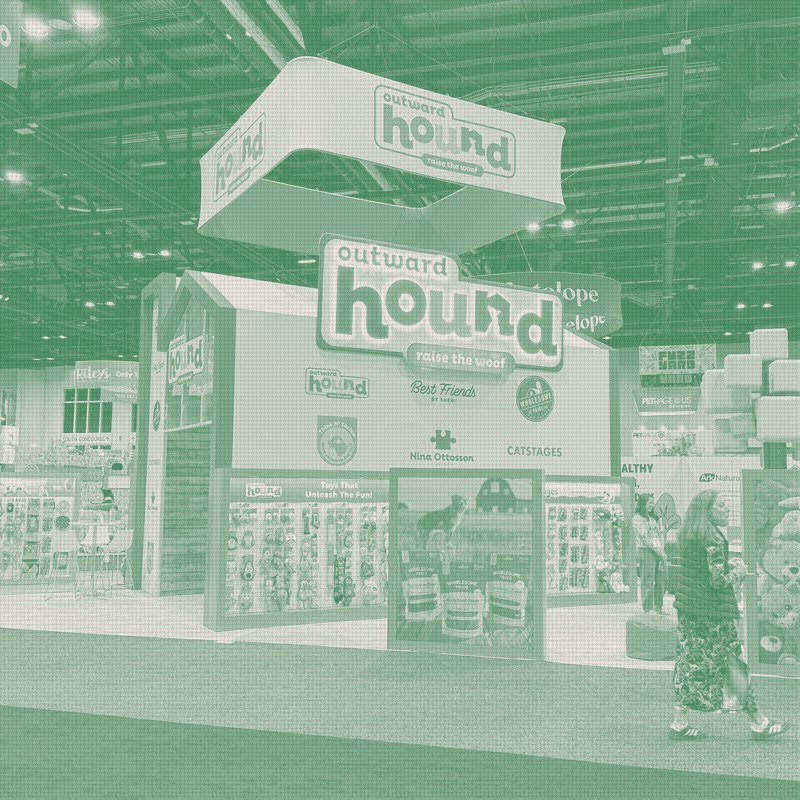
Outward Hound Gets Its Third Private Equity Owner as H.I.G. Takes Control
H.I.G. Capital took majority control of Outward Hound's seven-brand platform, its third PE owner in under a decade and a sign the M&A thaw reached hard goods.

Pet Care's Loyal Customers Hide a Harder Truth: Owners Aren't Paying Themselves
A new benchmarking survey of 457 pet care operators shows a segment with loyal customers and steady growth but chronic under-monetization, low occupancy, thin upsells, and owners who often aren't paying themselves. The "room to scale" story is also a survival story.