NVA Hires the CFO Who Took Elanco Public — JAB's IPO Path Comes Into Focus
National Veterinary Associates named Todd S. Young as CFO effective May 1, 2026. Young led Elanco's 2018 separation from Eli Lilly and its IPO. Combined with JAB Holdings' disclosed plan to explore a public listing for its veterinary platform, this is the strongest signal yet that NVA is preparing to go public.

Hiring the CFO who took Elanco public is not how a private equity sponsor staffs for status quo. JAB Holdings did exactly that on April 24, naming Todd S. Young as the next Chief Financial Officer of National Veterinary Associates, effective May 1, 2026. Combined with JAB's already-disclosed plan to explore a public listing for its veterinary platform, this is the most explicit signal yet that one of the four largest corporate vet operators in the U.S. is preparing to go public.
What Happened
NVA announced the appointment on April 24. Young joins from Acadia Healthcare, where he had served as CFO since October 27, 2025 — a tenure of roughly six months. He reports to NVA CEO John Bruno, who himself joined the company in early 2024.
Young's résumé is the part that matters. He was Executive Vice President and CFO at Elanco from 2018 through 2024, where he led the company's separation from Eli Lilly, the March 2019 IPO, and the $7.6 billion acquisition of Bayer Animal Health in 2020. He built Elanco's 60-person corporate finance function from scratch and was named Indianapolis Business Journal's CFO of the Year in 2020. Before Elanco, Young was CFO at ACADIA Pharmaceuticals (no relation to Acadia Healthcare).
NVA is a portfolio company of JAB Holdings, which acquired the platform from Ares Management and OMERS in June 2019. In 2023, JAB split the business in two: Ethos Veterinary Health, which operates roughly 145 specialty and emergency hospitals, and NVA, which retains general practice, equine, and pet resort operations across the U.S., Canada, Australia, and New Zealand. NVA acquired Ethos itself in a $1.65 billion deal in 2021 before the operational split.
The release does not name the outgoing CFO. CEO Bruno, in the announcement, framed the hire around Young's "public company experience and deep industry knowledge."
Why It Matters
This is the second senior leadership hire at NVA in 18 months, and the third top-five corporate vet platform to reshuffle leadership inside a 30-day window. Read in isolation, the move is operational. Read against JAB's disclosed strategy, it's the staffing decision that precedes a transaction.
1. JAB has already said publicly that NVA is IPO-bound. S&P's most recent credit research on JAB notes that the firm is "exploring IPO opportunities" for both NVA and Ethos, and estimates that listing both could push JAB's share of listed investments back toward 60%. JAB just closed the $18.7B sale of JDE Peet's to Keurig Dr Pepper in March 2026, which crystallized cash and reduced its listed-asset share to 20-25% — a level S&P flagged as low for JAB's BBB rating. The IPO of NVA is one of the cleanest paths to bringing that ratio back up.
2. Young's profile is purpose-built for this transaction. The Elanco separation from Eli Lilly is the closest analog in the animal health space to what JAB would need to execute with NVA — a carve-out from a much larger sponsor portfolio, a finance function built from scratch, and S-1 readiness on a compressed timeline. There are perhaps a dozen CFOs in the U.S. who have done a public-company animal-health carve-out at scale. Young is one of them. His Acadia Healthcare tenure (six months) is short enough to read as a stopover rather than a destination, particularly given the activist pressure that drove the Acadia hire in the first place.
3. The corporate vet talent flow is consolidating around exit prep. Heartland Veterinary Partners named Connor Lawrie as CEO on April 20, in what the company described as a "planned leadership transition." Mission Pet Health, the entity formed by the July 2025 merger of Southern Veterinary Partners and Mission Veterinary Partners, absorbed roughly $4 billion in fresh equity and $3 billion in secured debt at the close — a Silver Lake / Shore Capital recapitalization that itself reads as a halfway-house to liquidity. Three of the four largest non-Mars corporate vet platforms are now executing some flavor of exit-prep choreography in parallel.
4. The IPO comp set is favorable but thin. The closest public comp for NVA is Pets at Home (LSE: PETS) in the UK, which trades at roughly 12x forward EBITDA, well below where private vet roll-ups have been transacting. The U.S. has no listed pure-play corporate vet operator since Mars took Antech-and-VCA private in 2017. That absence is both a gap NVA could fill and a reason to be cautious — public market investors have not had a recent at-bat on this category, and the pricing reference is the higher private-market multiple, not the public one. Young's job, if the IPO happens, is closing that gap in narrative form.
5. Independent practice owners and regional consolidators should plan for two phases. Pre-IPO, NVA typically pulls back on acquisition pace to clean up cash flow and EBITDA composition for the registration statement. Post-IPO, public-company NVA gets a more efficient currency for stock-based deals. For independent practice owners considering a sale, that means the next 12 months are likely to see softer NVA bidding, followed by a potential acceleration in 2027 if the IPO closes and the stock holds. For regional consolidators (VetCor, PetVet Care Centers, Thrive, Heartland), it means a stronger competitor with a public-equity acquisition vehicle is on the horizon — which raises the strategic question of whether to sell into the pre-IPO window or compete against a re-equitized NVA after.
What to Watch
S-1 timing. A typical pre-IPO CFO arrives 9–18 months before filing. Young starts May 1. That puts a plausible S-1 window in the second half of 2026 or first half of 2027, with pricing depending on the public-market backdrop and the resolution of the Tariffied animal-health spending environment.
Bruno-Young joint disclosures. Watch for NVA to publish operating data it has historically kept private — same-clinic comp growth, doctor productivity, specialty mix — in interviews, conferences, and bond-investor calls. That's the IPO-marketing precursor.
Heartland's next disclosed move. Connor Lawrie's CEO transition was framed as "planned" but with no indication of strategic direction. If Heartland follows NVA into pre-IPO posture, the corporate vet category gets two near-simultaneous IPO candidates — which compresses the available demand window for both.
Mission Pet Health's path. With $7B in fresh capital absorbed in 2025, Silver Lake and Shore Capital have a clear preference for either a strategic exit to a global animal-health acquirer or a public listing. NVA filing first creates a roadshow comparable; Mission filing first eats the demand pool.
Mars's competitive response. Mars Veterinary Health (~2,000 hospitals via VCA, Banfield, BluePearl, AniCura, Linnaeus) is the only operator at greater scale than NVA. Mars typically does not respond publicly to competitor moves, but watch for accelerated AniCura integration milestones in Europe and any U.S.-side acquisitions that signal Mars closing capacity gaps before NVA hits the public market.
Young's first 90 days. Two markers will tell you which direction the IPO planning is heading: (a) hires into the corporate finance, IR, and SOX-readiness functions, which signal active S-1 preparation, versus (b) disclosed restructuring or non-core asset divestitures, which signal a different kind of exit (sale to a strategic, or a partial IPO of one of NVA's geographies).
Source: National Veterinary Associates Appoints Todd S. Young as Chief Financial Officer via Business Wire
Other News
More stories shaping the pet industry this week. From funding rounds and product launches to regulatory shifts and retail strategy, stay ahead of what's driving the market.

After 13 Years Photographing Dogs, The Dogist Launches Its First Product
Elias Weiss Friedman's picky-eater dog, Elsa, inspired his first product: Vitality, a $35 antioxidant chew developed with a board-certified veterinary nutritionist. Preorders open now ahead of a September 22nd release on The Dogist Company's site and TikTok Shop.
$250M Duffield Pledge Raises the Stakes on Vet Care Access
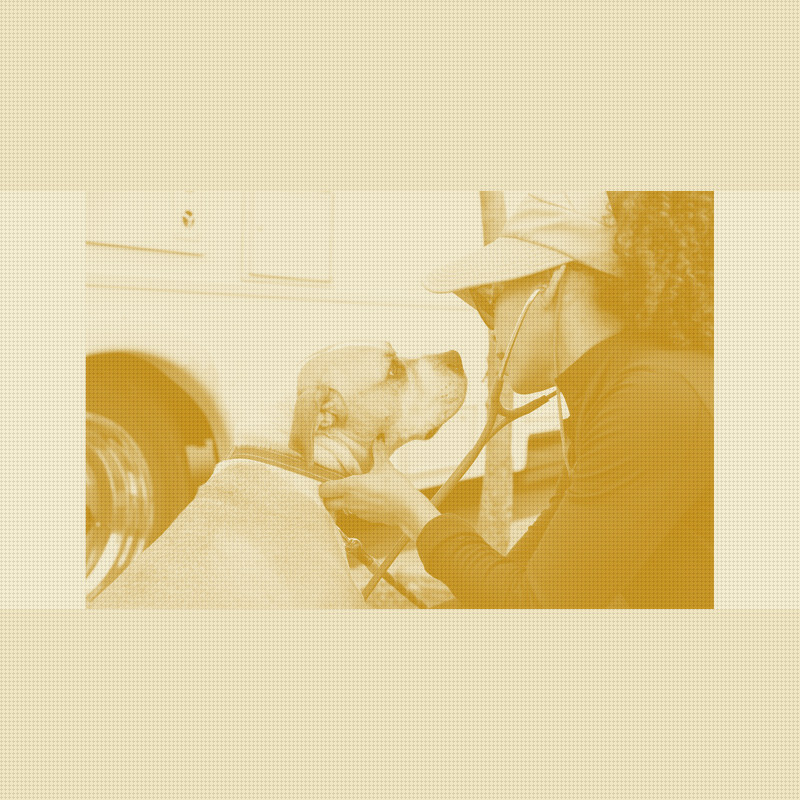
The Dave & Cheryl Duffield Foundation is committing $250 million over five years to expand nonprofit veterinary care, an initiative it calls the Duffield Big Bet for Pets. The pledge follows PetSmart Charities' $100 million commitment in 2023, pushing dedicated access-to-care philanthropy past $350 million in three years. For operators, the money increasingly funds nonprofit clinic capacity, not just family subsidies.

Loyal's Third Longevity Drug Clears the FDA's First Efficacy Bar
Loyal's LOY-003, a large-breed longevity drug targeting the growth hormone/IGF-1 pathway, has cleared the FDA's Reasonable Expectation of Effectiveness bar, the company's third such acceptance. The milestone de-risks Loyal's broader platform even as its furthest-along drug, LOY-002, still awaits a manufacturing review before conditional approval.