Luxturna's Breakthrough Prize Has a $3B Footnote for Animal-Health Biotech
Penn Medicine and Children's Hospital of Philadelphia won the 2026 Breakthrough Prize in Life Sciences for Luxturna, the first FDA-approved gene therapy for an inherited disease. The therapy was validated in a colony of blind Briard dogs at Penn Vet. Roche paid $4.3B for Spark Therapeutics to acquire it, then later wrote down $3B. The footnote matters for the animal-health biotechs using the same playbook.
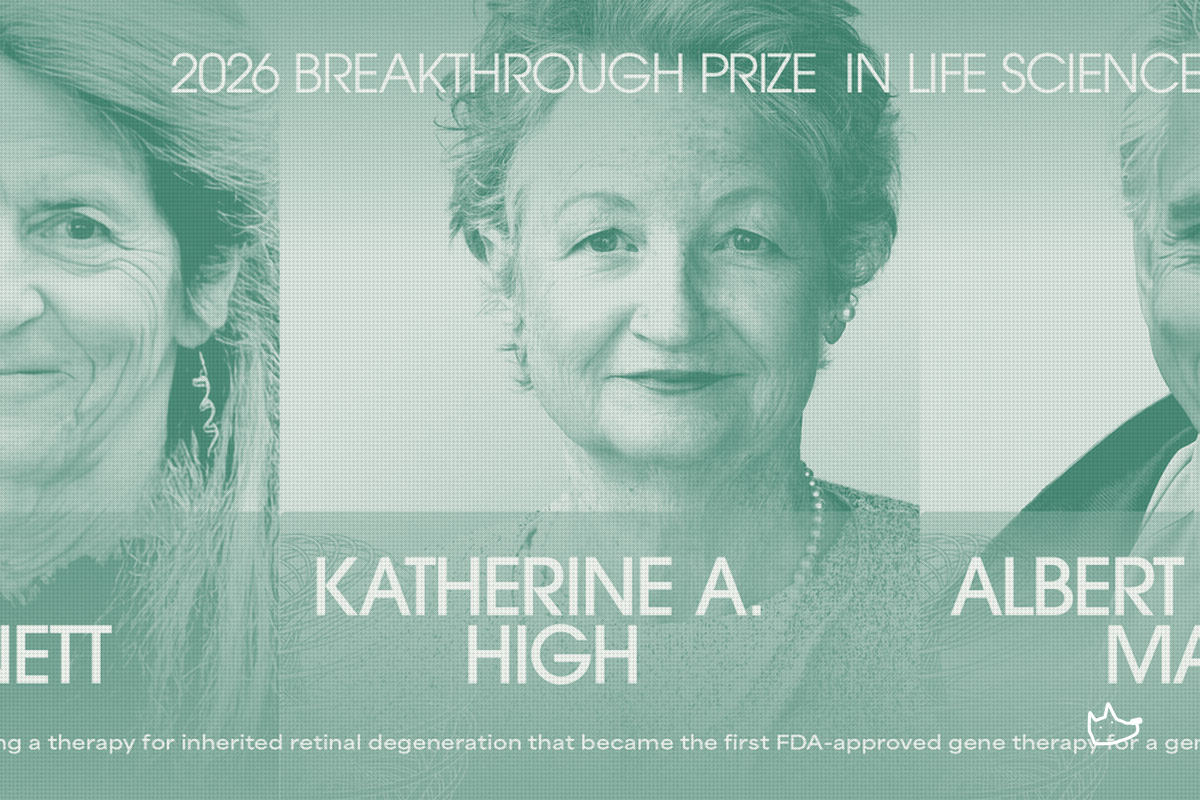
The 2026 Breakthrough Prize in Life Sciences went to three researchers whose gene therapy for inherited blindness was first validated in a colony of Briard dogs at Penn's veterinary school. That prestige is well earned. It is also a useful reminder to animal-health biotech founders that the vet-validated-then-humanized commercialization template has a cautionary chapter written into it.
What Happened
Penn Medicine and Children's Hospital of Philadelphia announced on April 18 that emeritus professors Jean Bennett and Albert Maguire (Penn Ophthalmology) and Katherine High (CHOP Pediatrics, founding director of the Raymond G. Perelman Center for Cellular and Molecular Therapeutics) were awarded the 2026 Breakthrough Prize in Life Sciences. The prize recognized their development of Luxturna (voretigene neparvovec), the first gene therapy approved by the FDA for any inherited disease.
The therapy treats Leber Congenital Amaurosis caused by biallelic mutations in the RPE65 gene. Validation ran through a Briard dog colony housed at the University of Pennsylvania School of Veterinary Medicine that carried a naturally occurring RPE65 defect producing the same childhood-onset blindness seen in the human disease. Bennett and Maguire used an adeno-associated virus vector to deliver a corrected copy of the gene into a single eye in three dogs. The dogs regained function and successfully navigated an obstacle course using the treated eye. That dog data carried the therapy into human trials at CHOP.
Luxturna was commercialized through Spark Therapeutics, which received FDA approval in December 2017, then priced the one-time therapy at $425,000 per eye. Roche acquired Spark for $4.3 billion in a deal that closed December 2019.
Why It Matters
The prestige headline is the easy story. The operator-relevant story is the footnote: in 2024, Roche wrote down roughly $3 billion on Spark, citing lower sales forecasts for its gene therapies including Luxturna. Regulatory history-making does not automatically translate to commercial performance, even with a Breakthrough Prize and $850K sticker price.
That tension matters because the Luxturna development pattern is the template several animal-health biotech companies are currently pitching to investors. Gallant just received FDA eligibility for expanded conditional approval on its feline osteoarthritis stem cell therapy. BioTesserae completed first-in-dog dosing for its PD-1 single-domain antibody in collaboration with Sunflower Therapeutics. Platform biotechs working in comparative oncology and regenerative medicine increasingly frame companion-animal approvals as a regulatory on-ramp to eventual human-market products. The Penn Vet story is the poster example of that pathway working end to end.
What the Roche write-down adds is a reality check on three specific economic assumptions that founders and investors working that template should stress-test:
- Addressable patient population. LCA affects roughly 1,000 to 2,000 patients in the US. A single-dose therapy with that small a denominator is commercially fragile even at $850K per patient because the revenue curve collapses quickly once initial demand is served. Companion-animal indications are often larger (feline OA affects an estimated tens of millions of cats globally), but pricing power is structurally lower. The math has to work on one side or the other.
- Payer and insurance infrastructure. Human rare-disease reimbursement took years to develop case-by-case approval pathways for Luxturna. On the veterinary side, US pet-insurance penetration was 3.9% of all pets at the end of 2024 — 5.5% for dogs and 2.0% for cats — per the NAPHIA 2025 State of the Industry Report. That caps the addressable market for any therapy priced outside the typical out-of-pocket threshold. A $10,000 veterinary gene therapy has no Luxturna equivalent on the payer side.
- The "first-in-class" premium decays faster than founders model. Luxturna's commercial decline accelerated as second-generation therapies and competing mechanisms reached the clinic. Animal-health platforms operating in stem cells, checkpoint inhibition, and AAV delivery should expect the same dynamic on a faster timeline because veterinary regulatory pathways are compressing.
The durable operator takeaway from the Breakthrough Prize is not that vet schools are a free call option on the next Luxturna. It is that academic veterinary programs (Penn Vet, Cornell, UC Davis, Colorado State, Texas A&M) are critical infrastructure for translational medicine, and the animal-health biotechs that will survive the next decade are the ones building real partnerships with those programs, not just using them as a proof-of-concept on the way to a human indication.
What to Watch
Three questions will help operators and investors separate signal from prestige over the next several quarters.
First, how Gallant executes on its FDA conditional-approval pathway for feline OA. The stem-cell therapy category needs a commercial reference point with companion-animal economics, not a borrowed template from human gene therapy. Conditional approval plus reimbursement strategy plus clinic adoption curves are the data points that would tell operators whether this is a category or a one-off.
Second, whether any of the major animal-health incumbents (Zoetis, Elanco, Merck Animal Health) signal deeper moves into translational medicine beyond their current companion-animal SKUs. A large-pharma partnership or licensing deal with an academic veterinary program in the next 12 to 18 months would be the clearest leading indicator that the one-health thesis is moving from conference-panel talking point to capital-allocation reality.
Third, keep an eye on how Roche ultimately positions Spark post-write-down. If the industry's most visible gene-therapy commercial experiment is restructured or partially divested, that sends a specific message to animal-health biotech boards about how patient-capital investors should model multi-year commercial ramps on premium-priced therapies, regardless of scientific prestige.
Other News
More stories shaping the pet industry this week. From funding rounds and product launches to regulatory shifts and retail strategy, stay ahead of what's driving the market.

HABRI survey puts pet ownership at 74% of U.S. adults
HABRI's 2026 survey of 3,000 U.S. adults finds 74% own a pet and 15% plan to get one. Strongly bonded owners see the vet more, and housing rules and cost are the main barriers for would-be owners.

PetSmart Charities aims its adoption week at big dogs
PetSmart Charities opened National Adoption Week on October 19th, 2026, running through October 25th at nearly every PetSmart store, and is urging families to consider big dogs, which Hill's found spent 70% more time in shelters than small dogs in 2025.

Spot & Tango passes $200M in annual recurring revenue
Spot & Tango said on October 15th, 2026 that it generates more than $200M in annual recurring revenue and has served more than 180 million meals, as Goldman Sachs honored founder Russell Breuer. The company says it is profitable, and its shelf-stable UnKibble now faces a rival format from The Farmer's Dog.