Pet Food Manufacturing: Build, Partner, or Acquire
Every scaling pet brand faces the manufacturing question: stick with co-packers, build your own facility, or acquire existing capacity. This guide provides the decision framework operators actually use, with real costs ($50K-$1M+ for equipment), timelines (months vs. years), and the criteria that determine which path fits your stage.
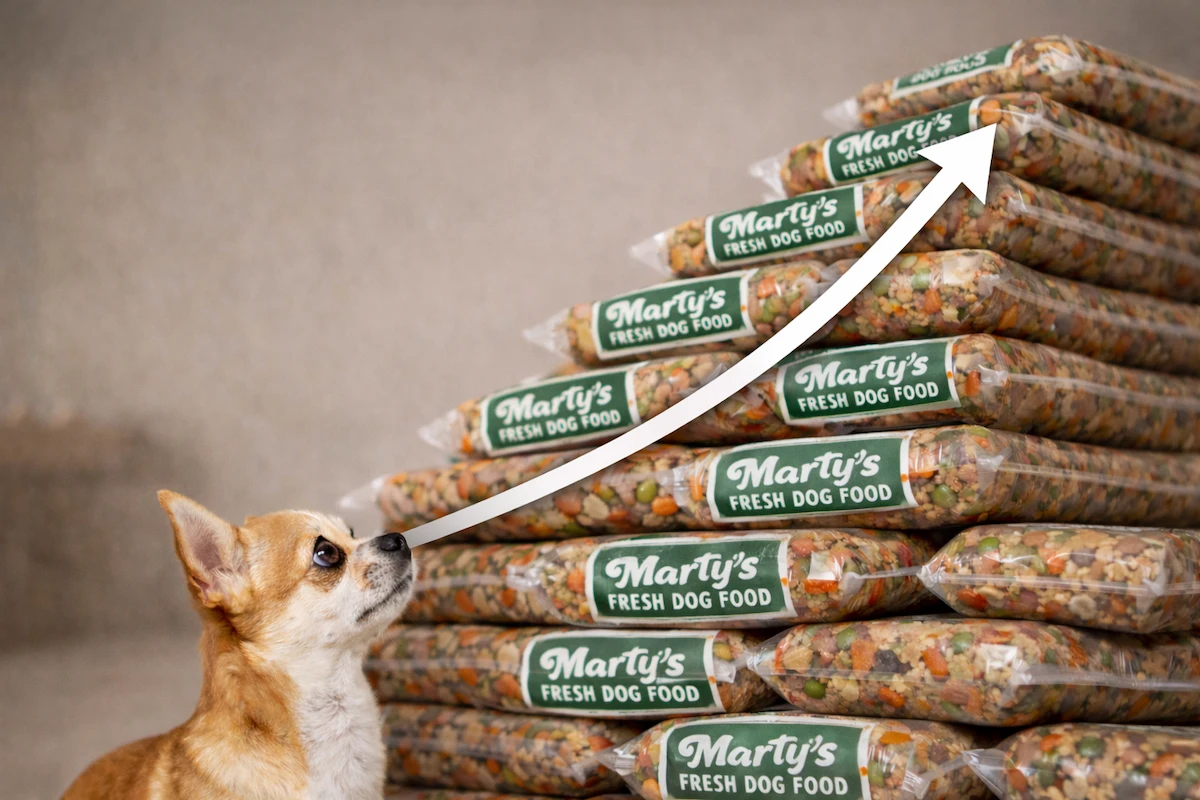
Every scaling pet brand eventually faces the same question. You've proven product-market fit with a co-packer. Volume is growing. Margins matter more than they used to. And now you're wondering whether your manufacturing strategy should evolve.
The answer isn't obvious. Build your own facility and you're betting millions on a capability that takes years to develop. Stay with co-packers and you're ceding control, margin, and scheduling priority to someone else's operation. Acquire existing capacity and you're buying complexity along with capability.
Most content about pet food manufacturing explains the production process. This isn't that. This is the decision framework operators actually use when the stakes get real.
The Real Question Isn't "How" — It's "Which Path"
Pet food manufacturing strategy comes down to three paths, and each one trades off differently.
Co-manufacturing means partnering with facilities that produce for multiple brands. You provide the formula and specifications. They provide the equipment, expertise, and production capacity. This is where most brands start and where many stay.
Building means constructing or leasing your own production facility, installing equipment, hiring staff, and bringing manufacturing in-house. This requires significant capital, time, and operational expertise.
Acquiring means buying an existing manufacturing operation. You're purchasing not just capacity, but capabilities, customer relationships, and (hopefully) operational know-how.
Each path works. Each path has brands that succeeded with it and brands that failed. The difference isn't which path is objectively better. It's which path fits your capital position, timeline, control requirements, and strategic goals.
The operators who get this wrong usually make one of two mistakes. They stay with co-packers too long, bleeding margin at scale when the economics no longer make sense. Or they build too early, tying up capital and management attention in manufacturing when they should be focused on brand and distribution. Both mistakes are expensive. Both are avoidable with clearer thinking about the decision criteria.
When Co-Manufacturing Makes Sense
Co-manufacturing is the default for a reason. It works for most brands at most stages.
The math is simple. A co-packer spreads fixed costs across multiple clients. Equipment, facilities, regulatory compliance, quality systems, and specialized staff all get amortized over production runs for dozens of brands. You pay per unit, which means your costs scale with your volume rather than sitting fixed whether you sell or not.
Timeline favors co-manufacturing heavily. Working with a contract manufacturer typically means 1-3 months from signed agreement to first production run. That assumes you have a finalized formula and packaging specs. Compare that to building, which takes years, and the speed advantage is obvious.
Capital preservation is the other major factor. Starting a pet food manufacturing operation from scratch requires $10,000 to $500,000 or more in initial investment, with production equipment alone running $50,000 to over $1 million depending on capacity and product type. That's capital you could spend on marketing, R&D, or inventory. For most growing brands, those investments generate better returns than owning manufacturing.
Expertise matters too. Pet food manufacturing involves food safety systems, regulatory compliance, equipment maintenance, and production optimization. Co-packers have done this for years across multiple brands. You'd be learning it from scratch while also running the rest of your business.
The limitations are real but manageable at lower volumes. You'll face minimum order quantities that may force larger production runs than ideal. You'll compete with other brands for production slots. You'll have less control over scheduling, quality processes, and formula tweaks. And you'll pay a per-unit premium that makes sense when you're small but compounds as you scale.
Co-manufacturing stops making sense when that per-unit premium becomes significant enough to fund your own operation, or when control over production becomes strategically critical. For most brands, that inflection point is further away than they think.
When Building Your Own Facility Makes Sense
Building only makes sense when three conditions align: you have the capital, you have the volume, and you need the control.
The capital requirement is substantial. Beyond equipment costs of $50,000 to $1 million+, you're looking at facility lease or purchase, buildout to meet food safety standards, hiring and training production staff, quality and compliance systems, and ongoing maintenance. Packaging equipment alone adds approximately $120,000. Most brands underestimate the total investment by 30-50%.
The timeline is the killer for brands that need capacity soon. Building out manufacturing capability takes 1-3 years from decision to production. That includes site selection, permitting, equipment ordering (with its own lead times), installation, testing, validation, and regulatory approval. If you need more capacity in the next 18 months, building won't solve your problem.
Volume is what makes the economics work. At some point, the per-unit premium you're paying your co-packer exceeds the per-unit cost of owning your own facility. That break-even point depends on your product type, your co-packer's rates, and your capital cost. But it generally requires consistent, predictable volume that justifies fixed costs. If your demand is volatile or seasonal, building is riskier.
Control is the non-financial reason brands build. Owning manufacturing means complete control over scheduling, quality processes, and formula confidentiality. Your production runs don't compete with other brands for slots. Your quality systems can be designed exactly to your specifications. Your proprietary processes stay proprietary.
The hidden costs catch most brands off guard. Manufacturing facilities need maintenance. Equipment breaks. Staff turns over. Compliance requirements change. The co-packer was handling all of this invisibly. Now it's your problem. The founders who succeed with owned manufacturing are the ones who respect it as a real business function requiring dedicated leadership, not a side project the operations team handles.
The brands that should consider building are typically at $10M+ in revenue, have predictable volume, healthy margins that can absorb fixed costs, and either need control for strategic reasons or see manufacturing as a long-term competitive advantage. If that's not you, building probably isn't your path.
When Acquisition Is the Play
Acquisition sits between co-manufacturing and building. You get owned capacity without the timeline of building from scratch. You also get someone else's problems along with their capabilities.
The recent market shows the pattern. 2025 saw measured but active M&A in pet food manufacturing, with over 20 deals in the second half of the year. The activity concentrated in premium segments. The Nutriment Company acquired five brands including Puromenu, BAF Petfood, Bulmer Pet Foods, and Graf Barf, building a European raw pet food manufacturing network through acquisition rather than construction.
The strategic rationale varies but follows patterns. Geographic expansion is common. Building a new facility in a new market takes years and local knowledge you may not have. Acquiring an existing operator gets you manufacturing capacity plus distribution relationships plus market knowledge in one transaction.
Category entry is another driver. Hill's Pet Nutrition acquired Prime100 in Australia to enter the fresh/refrigerated pet food segment. Building fresh food manufacturing capabilities from scratch would have taken years and required expertise Hill's didn't have internally. Acquisition accelerated the timeline dramatically.
Capability acquisition applies too. Specialty manufacturing (freeze-dried, raw, fresh) requires specific equipment, processes, and expertise. Buying an operator who already has those capabilities is often faster and less risky than developing them internally.
The due diligence is where acquisitions succeed or fail. You're not just buying equipment. You're buying customer concentration risk (what if their biggest customer leaves?), equipment condition (deferred maintenance becomes your problem), staff (key people may leave), and regulatory standing (compliance issues are now your compliance issues). The manufacturers worth acquiring know their value. The ones desperate to sell often have reasons.
Acquisition makes sense when you need owned capacity faster than you can build it, when you're entering a new geography or category, or when specific capabilities are hard to develop organically. It requires capital, M&A expertise, and the operational bandwidth to integrate what you're buying. For most brands, it's not the right path. For the right brands at the right moment, it's the fastest path to manufacturing capability.
The Decision Criteria That Actually Matter
Forget the generic advice. Here are the specific factors that should drive your decision.
Volume and predictability. Co-manufacturing works at any volume but especially at lower volumes. Building requires consistent volume to justify fixed costs. Acquisition requires enough scale to operate what you're buying. Map your current volume, your realistic growth trajectory, and your confidence in that trajectory. Volatile demand favors co-manufacturing's flexibility.
Capital availability and cost. Building requires significant upfront capital with returns over years. Acquisition requires even more capital upfront but with faster path to operations. Co-manufacturing preserves capital for other uses. What's your capital position? What's your cost of capital? Where else could that capital generate returns?
Timeline. If you need additional capacity in the next 12 months, building won't help you. Co-manufacturing is weeks to months. Acquisition is months (if you find the right target). Building is years.
Control requirements. How much does scheduling flexibility matter? Quality process control? Formula confidentiality? If these are "nice to have," co-manufacturing is fine. If they're strategically critical, ownership makes sense.
Category complexity. Standard dry kibble has many co-manufacturing options. Specialty formats (fresh, raw, freeze-dried) have fewer. The more specialized your product, the more limited your co-manufacturing options and the stronger the case for owned capacity.
Exit considerations. If you're building toward an exit, owned manufacturing capability often commands premium valuation. Acquirers like vertical integration. But they also like seeing that you can operate it profitably. Owned manufacturing that's bleeding money hurts your valuation more than helps.
The operators who navigate this well don't pick a path and stick with it forever. They pick the path that fits their current stage and re-evaluate as conditions change. Co-manufacturing at $2M in revenue doesn't mean co-manufacturing forever. Building at $20M doesn't mean you stop evaluating acquisition opportunities.
The Hybrid Model Most Brands Ignore
The three paths aren't mutually exclusive. The smartest operators often combine them.
The typical hybrid: use co-manufacturing for your core volume and owned capacity for specialty products, overflow, or test runs. You get the reliability and scale economics of co-manufacturing for the bulk of your production, plus the control and flexibility of owned capacity where it matters most.
Another variation: co-manufacture in your home market while acquiring capacity in expansion markets. The co-packer relationship that works in the U.S. may not exist in Europe. Acquiring a European manufacturer gets you both production capacity and market access.
The hybrid approach reduces single-point-of-failure risk. If your co-packer has capacity issues, you have backup. If your owned facility has equipment problems, you have overflow options. Supply chain resilience matters in pet food, and manufacturing diversification is part of that resilience.
The operational complexity is the downside. Managing multiple manufacturing relationships requires systems, processes, and people. Your quality standards need to be consistent across facilities. Your inventory management gets more complex. The brands that succeed with hybrid models have the operational maturity to handle the complexity.
Most brands don't need hybrid from day one. But as you scale, maintaining co-manufacturing relationships even as you build owned capacity gives you options that pure build or pure outsource don't provide.
Making the Call
The decision isn't which path is objectively best. It's which path fits your situation right now, with realistic assessment of when that might change.
If you're below $5M in revenue, co-manufacturing is almost certainly the right answer. Your capital and attention belong on product and customers, not manufacturing operations.
If you're between $5M and $15M with healthy margins and growing, you should be modeling the economics of owned capacity. Not necessarily building yet, but understanding when the math shifts.
If you're above $15M with consistent volume and manufacturing is strategically important, building or acquiring deserves serious consideration. The per-unit economics and control benefits start to outweigh the capital requirements.
Whatever you decide, revisit it. The brand that started with co-manufacturing at $2M should look different at $20M. The brand that built owned capacity should evaluate whether acquisition could accelerate geographic expansion. The decision criteria change as you scale, and your manufacturing strategy should change with them.
The operators who win don't treat manufacturing as a static choice. They treat it as an evolving capability that matches their stage, their strategy, and their constraints at each point in the journey.
Affiliated Products
Lorem ipsum dolor sit amet, consectetur adipiscing elit. Suspendisse varius enim in eros elementum tristique. Duis cursus, mi quis viverra ornare, eros dolor interdum nulla, ut commodo diam libero vitae erat.