Dr. Natalie Marks | CEO of VANE
Natalie Marks went from clinic owner to national media voice to CEO of VANE, the angel network connecting vet-tech founders with the practitioners who actually use their products. In this Q&A, she breaks down why culture is a clinic's hidden infrastructure, what separates fundable founders from forgettable ones (hint: coachability), and why the biggest gap in veterinary innovation isn't the product — it's context.

There are veterinarians, and then there are people who understand the machinery behind veterinary medicine — the economics, psychology, workflows, and human dynamics that determine whether ideas succeed or don’t.
Natalie Marks operates at that rare intersection. As a former hospital owner, national media voice, industry advisor, and now CEO of VANE, she evaluates not just products but the founders behind them. Our conversation pulled back the curtain on what truly drives adoption, why culture is the hidden infrastructure of clinics, and the traits that separate fundable founders from forgettable ones.
As a co-owner of Blum Animal Hospital, what was the hardest operational lesson you learned that vet school never prepares you for?
The hardest lesson was that managing people is infinitely more complex than managing patients. Veterinary school trains you to diagnose, treat, and communicate with clients — but nobody teaches you how to have a difficult conversation with a team member who isn't performing, how to be a human resource manager, how to build a compensation structure that retains great talent, or how to navigate the financial reality of payroll when an unexpected equipment repair hits.
I learned quickly that culture doesn't build itself. You have to be intentional about it every single day, or the default culture — one driven by stress and burnout — fills that vacuum for you.
You led Blum to become the first Fear Free Certified Hospital in Illinois. What surprised you most about how that process changed your team internally?
I expected the biggest shift to happen with our patients and clients. What I didn't anticipate was the transformation it created in our staff. Fear Free gave the team a daily shared language and a shared mission. Technicians who had been quietly burning out because they hated restraining a fearful cat suddenly felt empowered — they had tools and permission to do things differently.
It turned out that reducing fear, anxiety, and stress in our patients also reduced it in the people caring for them. The certification became less about a credential on the wall and more about reclaiming the reasons people entered veterinary medicine in the first place.
After stepping away from practice ownership, you moved into consulting, media, and education. Was there a moment when you realized your impact could extend beyond the exam room?
It happened during the canine influenza outbreak in Chicago. The new strain of dog flu landed at our practice with hundreds of cases in a matter of weeks. I was fielding calls from clients, yes, but I was also being asked to explain what was happening to national journalists on the Today Show and all local news outlets.
I remember standing in front of a camera and thinking: the information I give right now will reach thousands of pet owners who will never set foot in my clinic. That was the moment I understood that a single practitioner, no matter how skilled, can only help the patients in front of them, but accurate, accessible communication can protect animals across an entire city or even country.
That realization fundamentally changed how I thought about my role.
You became a Certified Veterinary Journalist in 2018 and later appeared on national outlets during events like the canine influenza outbreak. What surprised you most about explaining veterinary medicine to a national audience?
I was surprised by how much the audience wanted to trust us — and how easily that trust could be lost. People aren't looking for jargon; they're looking for honesty and clarity delivered by someone who clearly cares.
What I found was that the moment you speak to a national audience the way you'd speak to a client in your exam room - directly, warmly, with empathy and transparency — they respond. The bigger surprise was learning how rare that approach apparently is. Too often, experts get in front of a camera and retreat into clinical language. Translating medicine into human terms is often actually harder than the medicine itself.

You've worked closely with companies like Merck, Zoetis, and Royal Canin. What have you learned about the gap between how products are designed or marketed and how they're actually used in a busy clinic?
The gap can be significant, and it's rarely malicious — it's a failure of context. A product team develops something in a controlled environment and imagines an ideal workflow. But in a real clinic, a technician has thirty seconds, a scared dog, and three other tasks competing for their attention.
The most beautifully designed product fails if it adds friction to that moment, or the clinical team doesn’t understand the value proposition. What I try to bring to those partnerships is field-level context — real conversations about what compliance actually looks like, what clients push back on, and what the team will actually use versus what sits on a shelf.
The companies that listen and iterate on that feedback consistently produce better outcomes than those that don’t. I like to identify the common ground between the industry partner's goals and the frontline veterinarian's needs.
As CEO of the Veterinary Angel Network for Entrepreneurs, what motivated you to step into investing and startup mentorship rather than staying in the media space?
I kept seeing the same pattern: brilliant founders with genuine solutions to real veterinary problems — and no one in the room to tell them that the way they were pitching to a vet was completely missing the mark. The veterinary industry is unique. Our workflows, our margins, our client relationships, our regulatory environment — none of it maps cleanly onto human healthcare or consumer tech.
I realized that my value wasn't just in communicating medicine to the public; it was in being a translator between the veterinary world and the investment world. VANE was a way to formalize that and give it real teeth, so that good ideas actually had a path to becoming solutions vets would trust and use.
VANE has reviewed hundreds of startups but funded only a small number. Beyond the product itself, what separates the founders who earn backing from those who don't?
A coachable, curious, and approachable leadership team. Fullstop. We see many smart people who have built something genuinely impressive — but the founders who earn our backing are the ones who hear hard feedback and get curious rather than defensive, and who have done the hard work before meeting with us, showing an understanding of the veterinary world.
The veterinary space is littered with well-funded products that failed because the founders were too attached to their original vision to adapt when practitioners told them something wasn't working. The founders we invest in understand that the market is the final judge, not their pitch deck.
They also tend to have deep domain humility — they know what they know, what they don't, and aren't afraid to say so.
For readers who aren't familiar with it, can you walk us through what VANE actually is, how it works, and what role veterinarians play in the investment process?
VANE — the Veterinary Angel Network for Entrepreneurs — is an angel-investing and mentorship organization focused on the veterinary and animal health space.
We connect early-stage founders building products, platforms, and services for the industry with veterinary professionals who serve as both evaluators and investors. What makes VANE different is that the veterinarians aren't just advisors on the sideline — they're active participants in due diligence. They're the people who will actually use these products, so their validation means something. Founders get access to that clinical intelligence early, which helps them build better.
Investors get the benefit of domain expertise they wouldn't otherwise have. It's designed to close the loop between innovation and adoption in a field that has historically been slow to embrace both.
You recently became Chief Veterinary Officer of OpenVet, a free clinical intelligence platform. What real problem does it solve for veterinarians, and how do you balance that role alongside serving as CEO of VANE and CVO at MI:RNA?
OpenVet addresses something practitioners deal with quietly every day: the sheer volume of clinical information they're expected to stay current on, without time to absorb it. Guidelines change, new diagnostics emerge, drug protocols evolve — and a practitioner in a busy clinic rarely has the bandwidth to keep up the way they want to.
OpenVet consolidates that intelligence and makes it accessible at the point of care, for free. As for balance — I'll be the first to admit it requires ruthless prioritization. I stay sane by being very clear about what each role demands of me at any given time, and by surrounding myself with teams that don't need me to be the bottleneck on everything.
Each of these organizations is solving a different dimension of the same problem: a veterinary profession that deserves better infrastructure, better tools, and better support.
Early in your career in Atlanta, you were a frequent guest speaker for German Shepherd and Bernese Mountain Dog clubs. Is there a moment that still stands out from speaking in front of such passionate dog owners?
There was one evening with a German Shepherd club where I gave a talk on degenerative myelopathy, which is a progressive neurological disease that hits the breed hard. Partway through, I could see people in the room starting to tear up — not because I was saying anything dramatic, but because I was finally naming something they had watched their dogs go through without fully understanding.
After the talk, a woman came up to me and said, "I thought I'd done something wrong." She'd been carrying that guilt for two years. That moment taught me that education isn't just about transferring information. Sometimes it's about giving people permission to stop blaming themselves. I've never forgotten it, and I think about it every time I step in front of an audience.
Other Interviews
More conversations with founders, operators, and investors building the future of pet care.

Fawad Farrukh | VP of Feline Nutrition, Mars Pet Nutrition
July is National Pet Hydration Awareness Month, but inside Mars Pet Nutrition it reads as a multi-year strategic bet, not a seasonal campaign. Fawad Farrukh, who runs the North America feline portfolio, explains why the world's largest pet food company thinks moisture-rich feeding is the category's next structural shift. The tell: dog and cat toppers are up 129% and 138% since 2018, and Mars is building products to ride that behavior rather than fight it.
Joshua Fitzgerald | CEO, Zoomin Groomin
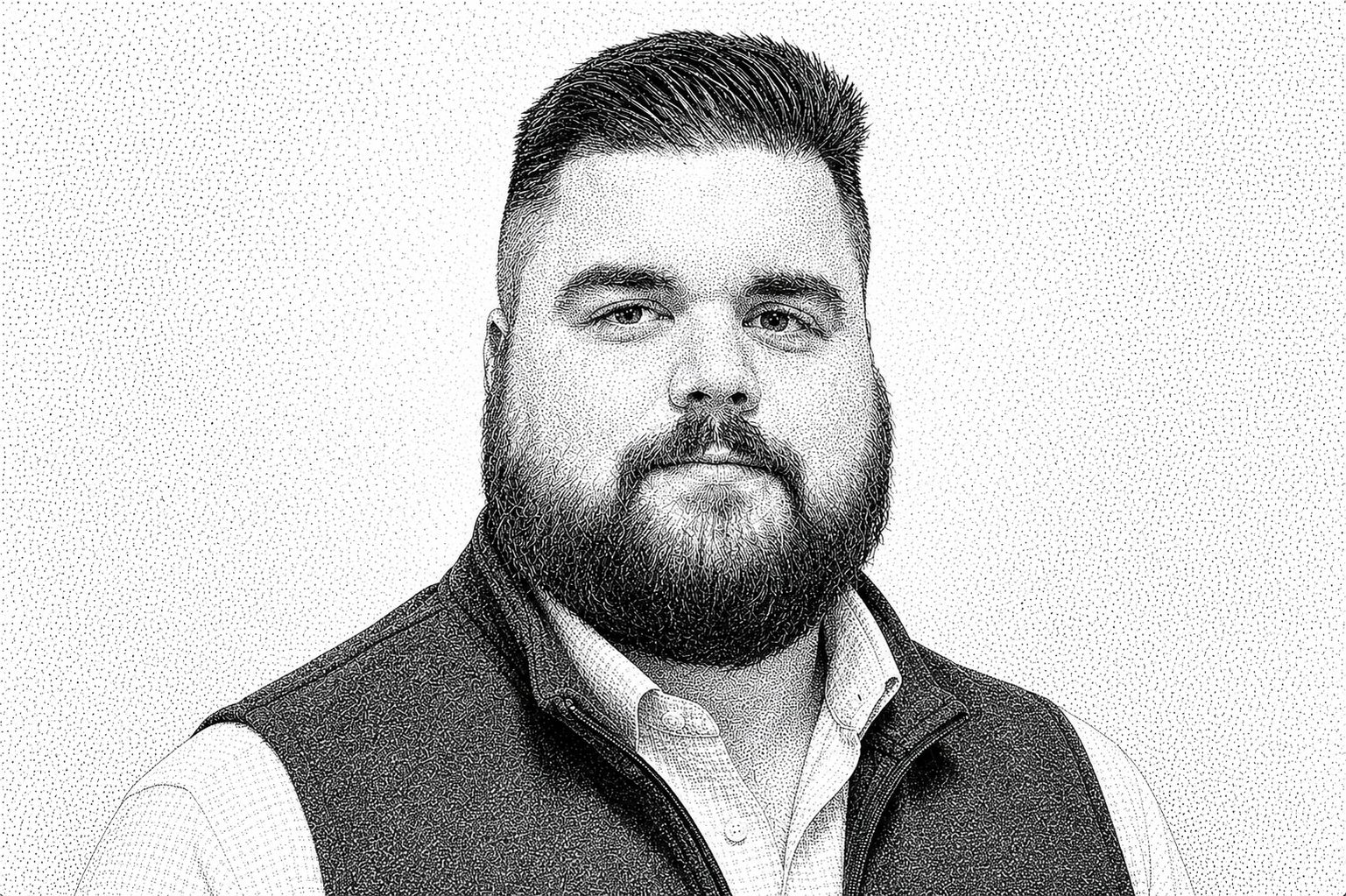
Joshua Fitzgerald lived Zoomin Groomin as a franchisee before running it. Now, past 300 mobile grooming vans, the CEO argues operational discipline beats flashy growth, walks through the metrics every franchisee should obsess over, and explains how the Loyalty Brands umbrella turns buying power and franchising experience into a competitive edge.
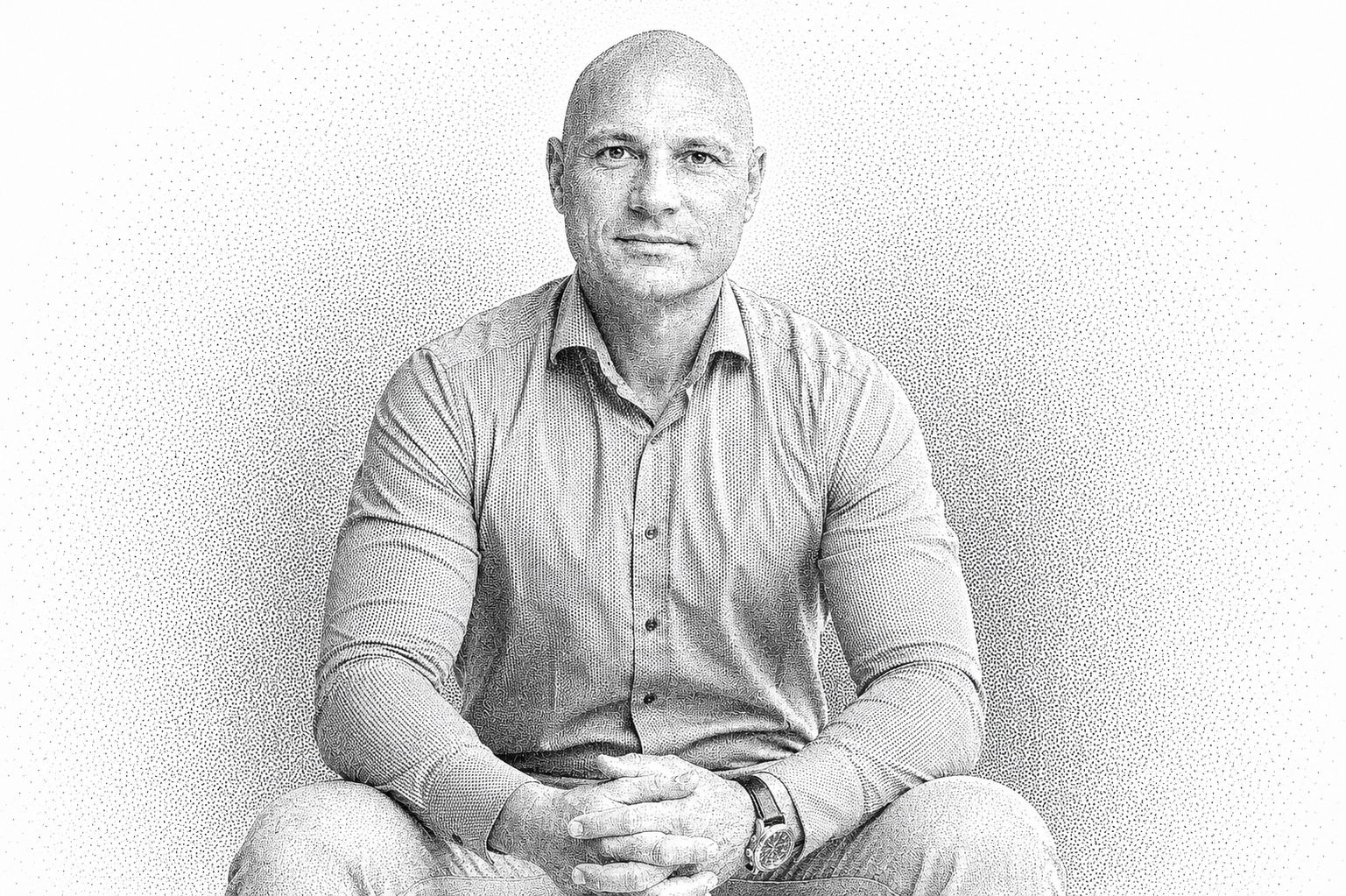
Ivan Zak | Co-Founder, Serenity Vet
After surviving burnout severe enough to nearly end his life, veterinarian Ivan Zak set out to fix the systems behind it. He bootstrapped SmartFlow and sold it to IDEXX, built the employee-owned group Galaxy Vets, and now co-leads Serenity Vet to tackle veterinary medicine's least-managed cost: labor. A candid conversation on burnout, ownership, private equity, and operational discipline.