
Mars Drops AI Periodontal Predictor Into a Stack It Already Owns
Mars's Waltham Petcare Science Institute has published a peer-reviewed, explainable-AI Bayesian network that predicts canine periodontal disease, the highest-volume preventive-care condition in dogs. Because Mars already owns Greenies, Antech, SYNLAB Vet, and roughly 3,000 clinics, the model drops into a vertically integrated commercial stack that IDEXX and Zoetis cannot match.
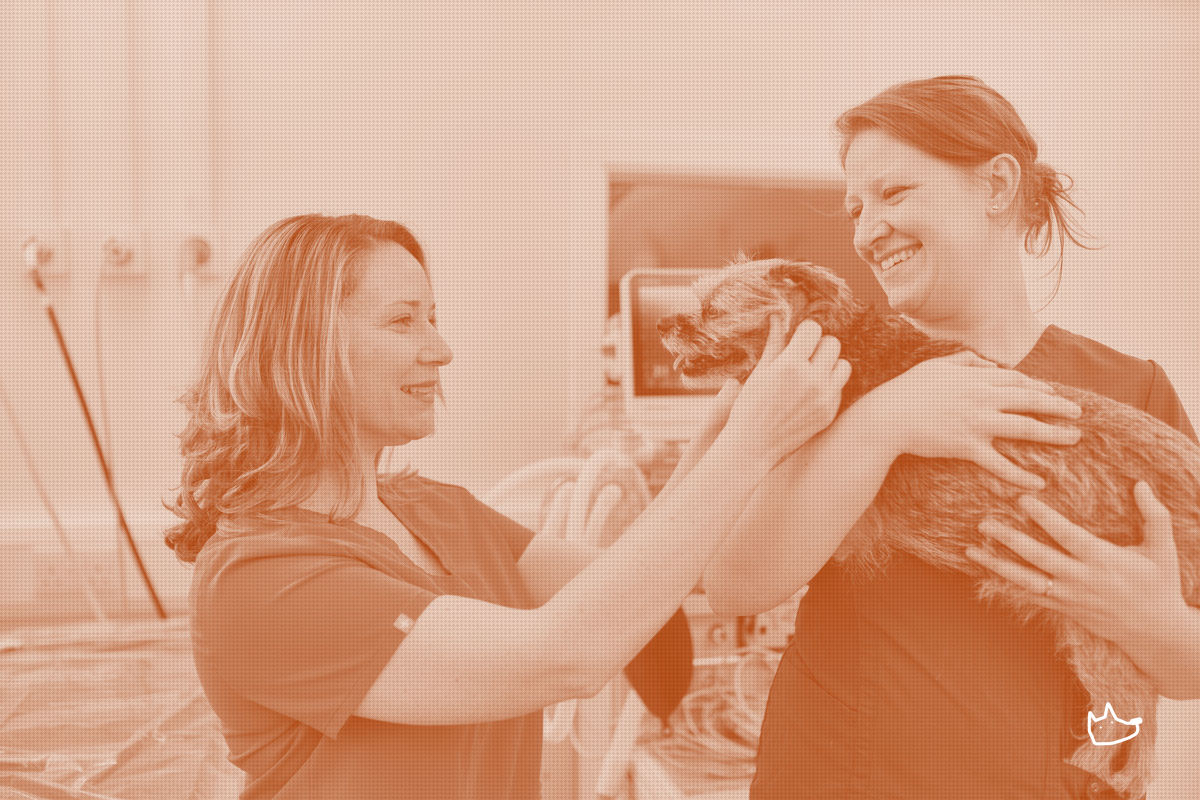
Scientists at the Waltham Petcare Science Institute, Mars's captive R&D arm, have published the first peer-reviewed, explainable-AI risk model for canine periodontal disease, the highest-volume preventive-care condition in dogs. The headline news is the model. The quieter news is that Mars already owns every commercial layer the model feeds into, from the dental treat brand to the lab network to roughly 3,000 clinics.
What Happened
The model was announced on April 23 and published in Frontiers in Veterinary Science by O'Flynn et al. as a hybrid causal Bayesian network — an explainable-AI architecture, not a black-box neural net.
It takes four inputs that a general-practice clinic already captures at intake: breed and size, age, head shape, and the quality of home dental care. Waltham's position is that the model moves canine oral care from reactive detection to predictive risk assessment, with "strong performance" in flagging high-risk dogs before clinical disease sets in.
Periodontal disease is not a niche target.
The routinely cited prevalence in veterinary literature is that roughly 80% of dogs show some degree of periodontal disease by age three, which makes it the single highest-volume wellness line item in general-practice veterinary medicine.
Waltham has published on canine dental health for years; the Complete Oral Health Index (COHI), also a Waltham output, is the scoring framework many vets use to stage the condition. What's new is the predictive layer — and the choice to publish it in a peer-reviewed venue with an explainable architecture rather than as a closed-source product.
Why It Matters
Every major animal-health player is building AI into its preventive-care stack.
Zoetis has pushed Vetscan Imagyst, its on-instrument analyzer, to seven microscopic testing capabilities and added AI Masses for cancer-cell classification in 2025. IDEXX pairs SediVue Dx in urine analysis with a coming DecisionIQ service that runs AI across combined patient data to flag subtle pattern changes. Both companies sell those tools into veterinary practices they do not own.
Mars's position is different. It sells into practices it does own. Mars Veterinary Health operates roughly 3,000 clinics globally through VCA (about 1,000 hospitals across the US, Canada, and Japan), Banfield (1,000+ hospitals in the US and Puerto Rico), BluePearl (nearly 100 specialty and emergency hospitals), and AniCura (nearly 500 clinics across 15 European countries), per Fortune.
Mars also owns Antech Diagnostics in North America and acquired SYNLAB Vet, a European specialist veterinary laboratory network, in 2023. It owns Greenies, the category-leading dental treat. It has already shipped two AI-powered consumer apps to pet parents — GREENIES Canine Dental Check and IAMS Poopscan — as part of a $1 billion digital investment inside the pet-nutrition business. Its radiology AI, RapidRead, runs through Antech on Azure Machine Learning.
Stacked together, that's the predictor, the product, the labs, the clinics, and the pet-parent-facing software inside a single corporate parent. The Bayesian model is the piece that closes the loop.
At a VCA or Banfield visit, a vet can run the predictor on intake data the clinic already has, route high-risk dogs into a Greenies-plus-brushing-plus-scaling protocol, send diagnostic samples through Antech or SYNLAB, and feed outcome data back to Waltham for refinement. No external partner is required at any step.
That changes the competitive math. IDEXX's and Zoetis's distribution depends on independent practices and non-Mars corporate groups -NVA, VetCor, PetVet Care Centers, Thrive, Heartland buying their tools. Mars's new predictor doesn't have to compete for that same shelf space to run at scale, because Mars has its own shelves.
Analyst estimates put pet care at more than half of Mars's roughly $55 billion in 2025 revenue, which makes pet care a larger line of business inside Mars than confectionery.
Two design choices in the publication are worth flagging for operators. First, explainability. A Bayesian network lets a clinician see why a given dog was flagged high-risk, which meaningfully lowers the barrier to adoption and shrinks the regulatory and liability risk profile for any downstream integration into decision-support software. Second, the input simplicity.
Breed, age, head shape, and home dental care quality are all already on an intake form. There is no new instrument to buy, no sample to collect, no workflow to insert. That is a deliberate design for retrofit into existing practice software.
What to Watch
Four signals will determine whether this reads as an internal productivity tool or a commercial product aimed at the wider market.
Deployment path. Does the model ship first inside VCA, Banfield, BluePearl, and AniCura workflows, or does Mars push it out to third-party vet-software vendors — Covetrus Pulse, IDEXX VetConnect PLUS, ezyVet, Shepherd, Digitail, Provet Cloud — as an API?
Captive-only deployment is a margin play on Mars's own clinic P&L. Open deployment is a direct competitive move against IDEXX and Zoetis. Waltham's release is silent on this.
Greenies tie-in. Is the predictive model wired to a product-recommendation layer — high-risk dog triggers a specific Greenies protocol with a defined brushing schedule and scaling interval?
Mars is the only player that can close this loop cleanly because Greenies and the predictor sit in the same corporate parent. A yes rewrites the unit economics for dental treats, turning a premium SKU into a clinically indicated one.
First-deployment geography. Waltham sits in the UK. The publication venue is Frontiers, a Swiss journal. Mars's 2023 SYNLAB Vet acquisition and its AniCura footprint make Europe the more coherent first-rollout market than the US. Which geography sees the tool commercially first will signal how Mars views its European diagnostics integration.
Training data source. The Mars Pets and Wellbeing Study (PAWS) is already generating the largest longitudinal companion-animal health dataset in the industry.
If the Bayesian network is trained on PAWS data, Mars has a reproducibility moat no competitor can match without its own clinic network. If it's trained on published literature, the moat is smaller and faster to close.
Source: A first for companion animals: AI-supported risk assessment will provide early warning of periodontal disease in dogs via PR Newswire
Other News
More stories shaping the pet industry this week. From funding rounds and product launches to regulatory shifts and retail strategy, stay ahead of what's driving the market.

Pet Care's Loyal Customers Hide a Harder Truth: Owners Aren't Paying Themselves
A new benchmarking survey of 457 pet care operators shows a segment with loyal customers and steady growth but chronic under-monetization, low occupancy, thin upsells, and owners who often aren't paying themselves. The "room to scale" story is also a survival story.

Fi Puts Its Dog Tracker on Starlink Satellites, Betting Connectivity Is the Moat
Fi launched Ultra, the first consumer dog tracker on T-Satellite with Starlink, keeping dogs locatable past cellular range. The satellite feature is really a subscription play, and the Whistle shutdown shows the lock-in risk baked into pet-wearable memberships.

Bond Vet and Small Door Merge to Form a VC-Backed Alternative to the PE Vet Roll-Up
Bond Vet and Small Door Veterinary have merged into a single company of more than 55 clinics serving 500,000-plus pets. It's a horizontal, venture-backed combination rather than a sale into a private-equity platform, and Small Door's CEO takes the top seat.