Pet Valu's New Stores Are Covering for Its First Negative Comp Quarter
Pet Valu's second-quarter same-store sales fell 0.2%, the first negative reading after four straight quarters of deceleration, even as new store openings kept total revenue growing 3.6%. The value-seeking consumer trend behind it echoes what Zoetis, Tractor Supply, and Central Garden have all reported this earnings season.

Same-store sales turned negative for the first time in at least four quarters at one of pet retail's largest specialty chains, even as it opened new stores and beat profit expectations. Pet Valu's second-quarter comp decline of 0.2 percent caps a streak of decelerating in-store demand that started more than a year ago, and it lands in the middle of an earnings season where "value-seeking consumer" has become the pet aisle's most repeated phrase.
Pet Valu's same-store sales turn negative in Q2
Pet Valu reported second-quarter revenue of $290.7 million, up 3.6% from $280.6 million a year earlier. Adjusted EBITDA rose 8% to $65 million, and adjusted net income per diluted share climbed 7.9% to $0.41, both ahead of the year-ago period despite the comp decline.
The same-store sales figure broke down into a 1.4% drop in transactions, partly offset by a 1.2% rise in average spend per visit. Management pointed to what it called "heightened value-seeking consumer demand trends" as the driver, alongside higher fuel costs pressuring household budgets.
CEO Greg Ramier said the company "delivered improved profitability, solid revenue growth and market share gains through disciplined execution," and pointed to "increasing engagement across our digital and loyalty platforms" as evidence the business model is holding up. The release did not disclose what share of sales now runs through those digital and loyalty channels, so the claim is directional rather than measurable.
Pet Valu maintained its full-year outlook: revenue growth of 2% to 4%, adjusted EBITDA margin of about 21%, and adjusted net income per share similar to fiscal 2025. It opened seven new stores in the quarter, bringing its network to 877 locations, and expects roughly 40 new openings for the full year. The board declared a $0.13 per share dividend.
Store growth is masking a demand problem
The comp line has been sliding for a year. Same-store sales grew 2.6% in the second quarter of 2025, then 2.3% in the third quarter, then flattened to 0.0% in the first quarter of 2026, and now sit at negative 0.2%. Four straight quarters of deceleration, ending in the first outright decline in that stretch.
Do the math on the two numbers Pet Valu did disclose, and the growth story looks different. Total revenue rose 3.6% while the existing store base contributed negative 0.2 points to that figure, which means new locations account for something close to all 3.6 points of reported growth on their own. That is an approximation built from the company's own total-revenue and same-store figures for the same quarter, not a number Pet Valu states directly, but the gap is wide enough that store openings, not store performance, are now carrying the business.
Pet Valu is not alone in describing this kind of customer. Zoetis flagged pet-spending softness in its own second quarter, and Tractor Supply just closed a third of its Petsense stores citing similar pressure in the pet aisle. Central Garden posted an 8% sales drop the same season it raised guidance. Pet Valu's numbers fit a pattern this quarter rather than standing apart from it.
For operators competing on foot traffic, the transaction-versus-spend split is the more useful signal than the headline comp number. Customers are visiting less often, not spending less when they show up. That reads less like demand disappearing and more like fewer, more deliberate trips, which rewards loyalty programs and stocked shelves over promotional frequency.
Pet Valu's commentary through 2025 pointed to discretionary categories like toys and accessories softening first, with food demand holding steadier. A comp decline built on fewer visits rather than a shrinking basket is consistent with that pattern: shoppers still buying the essentials, just skipping the extra trip for everything else.
It also raises the stakes on Pet Valu's own expansion plan. The company has talked publicly about growing from roughly 850 stores toward 1,200 over time. Doing that while the existing base shrinks on a comp basis means every new store has to outrun a softening core, not just add to a growing one.
What the next quarter will reveal about demand
Pet Valu's next scheduled update comes with third-quarter results this fall, the first real test of whether the value-seeking trend management described is stabilizing or still worsening. A second straight negative comp quarter would be harder to wave off as a one-quarter blip.
Watch the transaction count specifically. This quarter's decline was driven by fewer visits, not smaller baskets, and whether that count stabilizes will say more about consumer behavior than the blended same-store number alone.
The store-growth math is the other thing to track. Pet Valu is guiding to roughly 40 new stores this year against a base of 877, a pace that can keep total revenue growing even if comps stay negative for another quarter or two. Whether that trade-off holds through a slower back half, when the company also faces tougher prior-year comparisons, is the question its next earnings call will have to answer.
The digital and loyalty engagement the company cited this quarter is also worth watching for an actual number. Every quarter it goes undisclosed is a quarter operators can't tell whether it's a real offset to softer store traffic or just a talking point.
Other News
More stories shaping the pet industry this week. From funding rounds and product launches to regulatory shifts and retail strategy, stay ahead of what's driving the market.
Tucker's Buys Nugget's Healthy Eats, Its Second Brand Absorption This Year
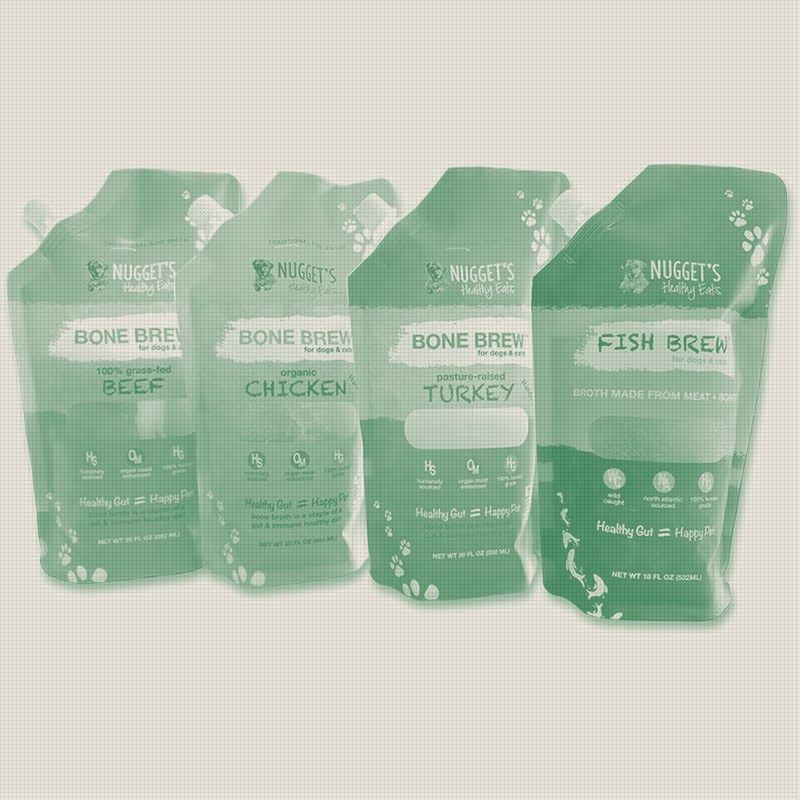
Tucker's Raw Frozen Food acquired bone-broth brand Nugget's Healthy Eats in April, retiring the name and folding its formulas into Tucker's own lineup. It's the second time this year Tucker's has absorbed rather than kept an acquired brand, and the rebranded line debuts this week at SuperZoo.

VAFO Acquires Pets Deli as Its Founder Returns to the CEO Seat
VAFO Group has acquired Berlin-based D2C pet food brand Pets Deli on undisclosed terms, with founder Tania Moser returning as CEO after more than a year as chairwoman. The deal is the second involving a German pet food company The Underbite has tracked in two weeks, and it fits a pattern of manufacturers buying direct customer relationships rather than building them.

Nine Pet Companies that Made the 2026 Inc. 5000
At least nine pet-industry companies, led by veterinary network Petfolk's 2,016% three-year growth, placed on the 2026 Inc. 5000 list of America's fastest-growing private companies. Their range, from consolidated veterinary care to doodle-breed grooming, maps where pet industry money is actually moving.