How to Find and Work With a Pet Food Co-Packer
Your co-packer choice shapes margins, timeline, and product quality for years. Here's how to find the right manufacturing partner, vet them properly, and structure a relationship that scales.
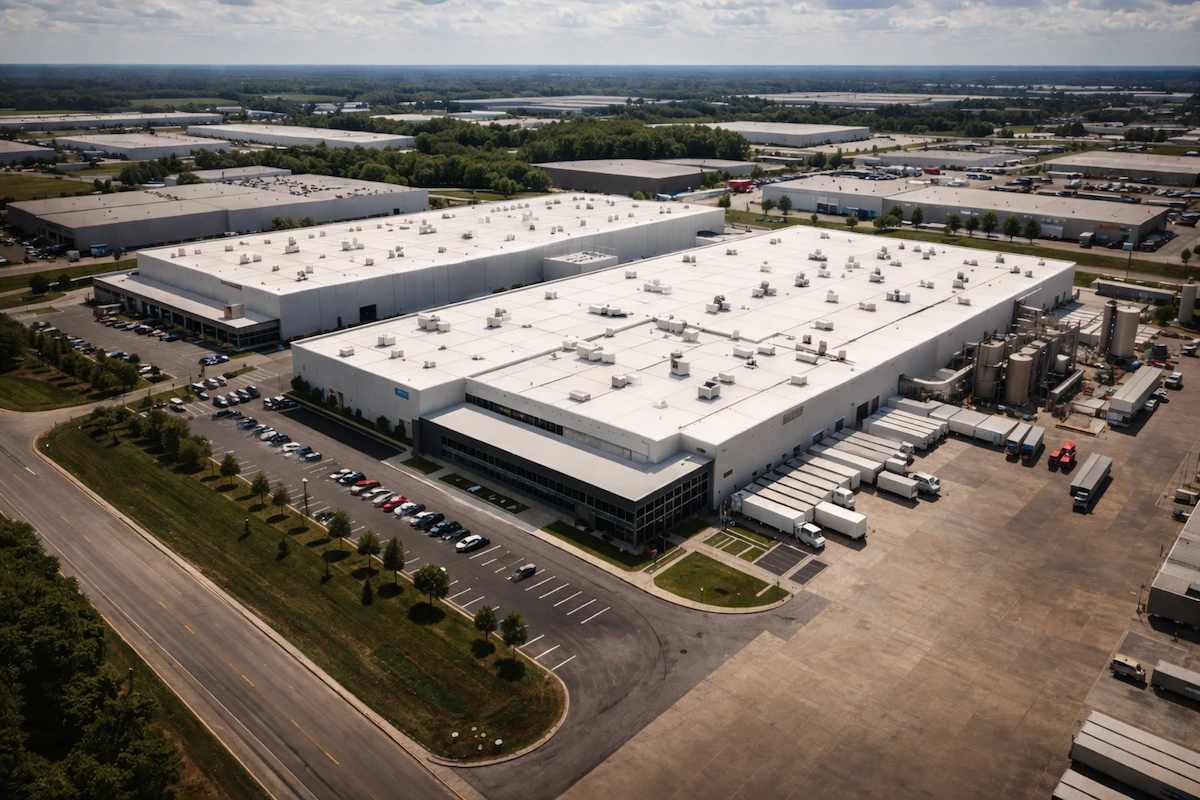
You've spent months perfecting your formula. Now you need someone to make it at scale — and that decision will shape your margins, timeline, and product quality for years. Most founders approach co-packer selection like dating: hoping for chemistry instead of running due diligence. The result is misaligned expectations, surprise costs, and sometimes a relationship that's harder to exit than a bad lease.
Here's how to find the right manufacturing partner, vet them properly, and structure a relationship that scales.
What Actually Gets Made (And What Doesn't)
Pet food co-packer relationships confuse founders because the terminology is inconsistent. Contract manufacturer, co-packer, private label — the industry uses these interchangeably, but they describe different service levels.
A co-packer (short for co-packaging or contract packing) manufactures your product to your specifications. You own the formula, you control the brand, they handle production. The best co-packers offer full-service partnerships: ingredient sourcing, manufacturing, packaging, warehousing, and sometimes formulation support.
What's typically included: production runs, quality control testing, packaging in your branded materials, batch documentation, and short-term storage. Many co-packers also source ingredients on your behalf, which can mean better pricing through their volume relationships.
What's not included: marketing, distribution, regulatory filings, or AAFCO registration. You're responsible for registering with state feed control programs where you sell. The co-packer manufactures to specification; you handle everything that happens before and after.
Private label is different — you're buying their existing formula and putting your label on it. Faster to market, less differentiation. True co-packing means your recipe, their equipment.
Before your first co-packer conversation, get clarity on your formula. If you haven't worked with a pet food formulation specialist, start there. Showing up to a co-packer without a complete formula is like asking a contractor to bid on "some kind of house."
Three Tiers, Three Trade-offs
Pet food co-packers segment into three tiers, each with distinct economics and requirements.
Large-scale manufacturers — companies like Alphia, Diamond Pet Foods, and Simmons Pet Food — operate facilities producing hundreds of millions of pounds annually. They're built for volume. Minimum order quantities often start around 50,000-100,000 pounds per SKU. Per-unit costs are the lowest in the industry because they've optimized every input: ingredient procurement at commodity scale, automated lines running 24/7, distribution networks that ship nationwide.
The trade-off: flexibility. Large manufacturers schedule production weeks or months in advance. Formula changes require extensive validation. You're one customer among dozens, and your 100,000-pound run is a rounding error on their annual output. They typically serve brands doing $5M+ in revenue. Startups rarely qualify — and when they do, they're often the lowest-priority customer.
Mid-market co-packers balance scale and customization. These facilities often produce 10-50 million pounds annually and work with brands at multiple stages. MOQs typically range from 10,000-50,000 pounds. They have the equipment for most standard formats — dry kibble, wet food, treats — and enough operational flexibility to accommodate formula tweaks between runs.
Mid-market is where most growing brands land. You get competitive per-unit economics without the rigid requirements of large manufacturers. The risk: capacity constraints. A mid-market co-packer serving 30 brands may not have room when you need to double production for a retail launch.
Startup-friendly co-packers specialize in emerging brands. MOQs can drop to 2,000-10,000 pounds, making them accessible for early-stage companies. Per-unit costs are typically 15-30% higher than large manufacturers — the trade-off for accessibility. These facilities offer development runs, tolerate formula iteration, and provide more hands-on support. Many will produce small batches for product testing before you commit to larger volumes.
Match your stage to the right tier. A small brand forcing themselves into a large manufacturer's minimum order will tie up capital in inventory they can't sell. A growing brand staying with a startup-friendly co-packer will overpay on every unit and eventually outgrow their partner's capacity.
Finding Manufacturers Worth Calling
Pet food co-packers don't advertise on Google. The best ones run at capacity and get referrals. Finding good options requires industry channels.
Trade directories are the starting point. The Pet Food Processing Buyers Guide lists co-packers by capability, format, and certification. It's organized by category — dry dog food, wet cat food, treats — so you can filter to manufacturers equipped for your product type.
Industry events accelerate relationships. SuperZoo (Las Vegas, August) and Global Pet Expo (Orlando, March) both draw co-packers exhibiting to brand founders. The value isn't the booth conversation — it's the efficiency of meeting five potential partners in two days instead of two months of cold outreach.
Formulator referrals are often the best leads. Pet food formulators work with co-packers constantly. They know which facilities handle which formats, who's running at capacity, and who's looking for new business. If you've worked with a formulator on your recipe, ask who they'd recommend for production.
Competitor research reveals hidden options. Check the label on products similar to yours — federal regulations require listing the manufacturer's name and address. If a competitor at your stage is using a specific co-packer, that facility probably serves brands like yours.
Cast a wide net initially. You want 8-10 conversations to understand the market before narrowing to 2-3 serious candidates.
The Vetting Checklist
Pet food co-packer selection fails when founders skip due diligence. The vetting process should answer five questions.
Capability match. What formats do they produce? What equipment do they run? If you're making freeze-dried treats and they specialize in extruded kibble, it's not a fit regardless of pricing. Ask about specific capabilities: high-meat formulas, novel proteins, organic handling. Get technical — their equipment limitations become your formula constraints.
Certifications matter. SQF (Safe Quality Food) certification is the industry standard, recognized by GFSI (Global Food Safety Initiative). Most major retailers require SQF-certified manufacturing. Ask what level — SQF Food Safety or SQF Quality — and whether they maintain organic certification if you need it.
Capacity reality. A co-packer's stated capacity means nothing. What matters is available capacity — and how that changes seasonally. Ask what percentage of their lines are currently utilized. Ask what happens during Q4 when every brand runs holiday inventory builds. A co-packer running at 90% utilization will struggle to accommodate your growth spikes.
Get specific about your growth trajectory. If you're planning to triple volume in 18 months, can they accommodate that? What's the lead time for adding production capacity?
MOQ and development runs. Minimum order quantities vary by product type and format. A 5,000-pound minimum for dry kibble might be 2,000 pounds for treats. Understand the minimums for your specific formula, not their standard answer.
Development runs are equally important. Can you produce 500 pounds to test before committing to a full production run? What's the cost structure for small-batch development? Some co-packers charge premium rates for development; others absorb it as customer acquisition.
Lead times. How far in advance do you need to schedule production? Lead times typically range from 4-12 weeks depending on the co-packer and season. Get clarity on both initial production and reorders. A 6-week lead time is manageable. A 12-week lead time during Q4 means ordering holiday inventory in September.
References from similar brands. Any co-packer will share their best references. Ask specifically for brands at your stage, in your category, who've worked with them for at least a year. Then ask those references the hard questions: How does the co-packer handle problems? What surprised you about working with them? Would you choose them again?
The True Cost of Manufacturing
Pet food co-packer pricing looks simple — until you add up all the fees.
Core manufacturing costs break into four components: ingredient procurement, processing, packaging, and storage. Most co-packers quote a per-unit cost that bundles processing and basic packaging. Ingredients are typically pass-through at cost plus a handling fee of around 5-15%.
For dry kibble, all-in manufacturing costs (excluding ingredients) often run $0.15-$0.40 per pound at scale, varying by complexity and volume. Premium formulations with novel proteins or specialized processing cost more. Wet food runs higher due to canning and retort processing.
Hidden costs inflate the real number. Setup fees for initial production runs can range from $2,500-$10,000 depending on formula complexity. Changeover fees apply when switching between your SKUs — especially for allergen considerations. Storage fees kick in if product sits longer than the included holding period, typically around 30 days.
Minimum commitment clauses create exposure. Some co-packers require annual volume commitments of 100,000+ pounds or impose penalties for falling short. Read these carefully before signing.
Modeling true landed cost requires accounting for everything: ingredients, manufacturing, packaging materials, setup fees amortized across expected volume, storage, and freight to your warehouse or 3PL. The manufacturing quote alone doesn't tell the full story — layer in all costs before comparing options.
Get detailed quotes from finalists before comparing. A co-packer with higher per-unit costs but lower setup fees and no minimums might be cheaper for your actual volume.
Contract Terms That Protect You
Pet food co-packer agreements contain provisions that will matter when things go wrong. Focus on five areas.
Formula ownership is non-negotiable. Your formula is your IP. The contract should explicitly state that you own all formulation data, batch records, and specifications. The co-packer should be prohibited from sharing your formula with other customers or using it for their own products. This seems obvious until you need to switch manufacturers and discover your formula is trapped.
Exclusivity and non-compete. Some co-packers request exclusivity within a product category or geography. Resist this unless you're getting meaningful concessions in return. More concerning: non-compete clauses that restrict your ability to manufacture elsewhere. Keep your options open, especially early.
MOQ commitments and ramp schedules. Annual minimum commitments should reflect realistic volume projections, not aspirational ones. Negotiate ramp schedules that increase minimums as you grow rather than locking in year-one requirements based on year-three projections. Include force majeure provisions for market disruptions.
Quality standards. The contract should specify testing protocols, acceptable defect rates, and procedures for rejected batches. Who pays for failed runs? At what point can you reject product? What's the dispute resolution process? These provisions seem academic until you receive a shipment with quality issues.
Termination clauses. How do you exit the relationship? Notice periods typically run 90-180 days. Understand what happens to remaining inventory, scheduled production, and prepaid commitments. Exit provisions matter more than entry terms — they define your negotiating leverage for the entire relationship.
Red Flags in Co-Packer Conversations
Pet food co-packer red flags emerge during vetting. Watch for these patterns.
Reference reluctance. A co-packer unwilling to connect you with current customers is hiding something. Either their relationships are troubled or their customer base is too small to have relevant references. Both are problems.
Certification ambiguity. When asked about SQF certification, the answer should be immediate and specific — level, audit date, results. Vague responses about being "in process" or "equivalent to" suggest they don't have the certifications you need.
Unrealistic timelines. A co-packer promising production far faster than competitors is either desperate for business or will disappoint you on delivery. Aggressive timelines that collapse under real-world conditions damage your launch plans and retail relationships.
Formulator pressure. If you've already developed your formula with a qualified formulator, a co-packer insisting you use their in-house formulation team is prioritizing their revenue over your formula integrity. Good co-packers work with external formulations.
Missing documentation. Request their food safety plan, allergen control procedures, and recent third-party audit results. A co-packer that can't provide these documents promptly either doesn't have them or has something to hide in them. FSMA requires written food safety plans for all animal food manufacturers.
One red flag is a warning. Multiple red flags with the same co-packer mean walk away.
Making the Partnership Work
Pet food co-packer relationships require active management. The best manufacturing partnerships share common practices.
Communication cadence matters. Establish regular check-ins — monthly at minimum — that cover production schedules, quality metrics, and upcoming volume changes. Don't wait for problems to surface. Proactive communication catches issues before they become crises.
QC sampling protocols should be explicit. When do you receive samples? How long do you have to approve? What happens if you reject a batch after production completes? Get these documented before the first run, not after a dispute.
Forecasting accuracy determines your manufacturer's ability to serve you. Provide rolling 90-day forecasts updated monthly. Significant volume swings — up or down — should come with as much advance notice as possible. Co-packers plan ingredients, schedule lines, and allocate labor based on your projections. Surprise changes break their operations and damage your relationship.
Plan for growth transitions. If you're at a startup-friendly co-packer, know what volume triggers a move to mid-market. Start those conversations before you outgrow current capacity. Manufacturer transitions can take 6-12 months to execute properly — qualification runs, packaging validation, regulatory updates. Starting late means production gaps.
Your co-packer is a partner, not a vendor. Treat them accordingly. Share your wins. Pay on time. Give them visibility into your business trajectory. The brands that build strong manufacturer relationships get prioritized when capacity is tight and accommodated when problems arise.
The Decision That Compounds
The co-packer you choose today shapes your business for years. Switch costs are high — new qualification runs, packaging changes, customer communication about manufacturing changes. More importantly, your co-packer's capabilities become your product's constraints.
Choose a partner who can handle where you're going, not just where you are. Do the diligence that most founders skip. Get the contract terms that protect your formula and your flexibility.
The founders who succeed at manufacturing aren't the ones who find the cheapest co-packer. They're the ones who find the right partner — and invest in making that partnership work.
Affiliated Products
Lorem ipsum dolor sit amet, consectetur adipiscing elit. Suspendisse varius enim in eros elementum tristique. Duis cursus, mi quis viverra ornare, eros dolor interdum nulla, ut commodo diam libero vitae erat.