Sustainable Pet Packaging: What Founders Actually Need to Know
Sustainable packaging is a positioning decision with real cost trade-offs. The actual costs, certifications worth pursuing, and the mistakes that turn sustainability claims into greenwashing liability.
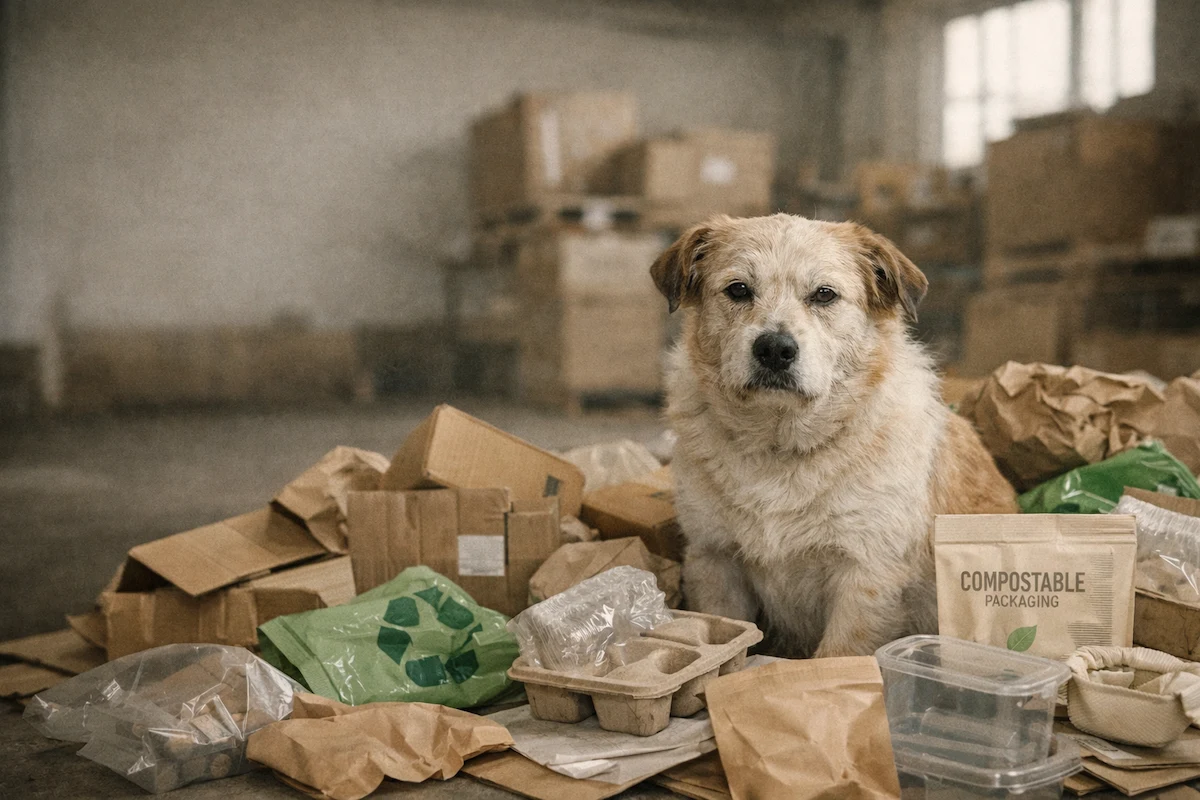
Over 99% of pet food packaging ends up in landfill. That's not a typo. The flexible bags that hold kibble, treats, and supplements are almost entirely non-recyclable through standard curbside programs — contributing roughly 300 million pounds of plastic waste annually in the US alone.
For founders, this creates a strategic question: Is sustainable packaging a cost center or a positioning advantage?
The answer depends on how you execute it. Done wrong, sustainable packaging is an expensive checkbox that doesn't move the needle. Done right, it's a differentiation strategy that commands premium pricing and builds brand loyalty. Here's how to think through the decision.
The Market Signal Is Real
Sustainable pet packaging isn't just a feel-good initiative — it's a market positioning play backed by consumer behavior.
91% of pet owners say they're willing to pay more for sustainable packaging when product quality, taste, and health benefits are equal. That's not a survey about what people say they want. It's a signal about purchasing friction — or lack of it.
More telling: 75% of respondents plan to increase spending on brands using sustainable packaging. That's active intent, not passive preference.
The skeptical read is that stated preferences don't always translate to behavior. Fair. But the premium pet segment — where The Underbite's audience operates — attracts buyers who already pay more for quality. Sustainability becomes table stakes in that market, not a differentiator.
The risk isn't that sustainable packaging costs more. The risk is that conventional packaging signals you're not a premium brand.
Four Material Categories (And What Each Actually Means)
Sustainable pet packaging materials fall into four categories. The distinctions matter because they determine what claims you can make — and whether those claims hold up to scrutiny.
Recyclable packaging means the material can be processed into new products. But here's the catch: most flexible pet food bags are technically recyclable, just not through curbside programs. They require store drop-off at participating retailers. The How2Recycle label system distinguishes between curbside-recyclable and store drop-off, which is why it matters for labeling claims.
Compostable packaging breaks down into organic matter — but only under specific conditions. Industrial composting (high heat, controlled environment) is different from home composting (your backyard bin). A bag labeled "compostable" that requires industrial facilities might as well be landfill if your customer doesn't have access to those facilities. BPI certification indicates industrial compostability; look for specific "home compostable" certifications if that's your claim.
Recycled content packaging uses post-consumer or post-industrial materials. Post-consumer (materials that went through consumer use) carries more weight than post-industrial (manufacturing scraps). The percentages matter for marketing claims.
Biodegradable packaging is the greenwashing trap. "Biodegradable" has no standard timeline or conditions — everything biodegrades eventually, given enough centuries. Without specific certifications, this claim is nearly meaningless and increasingly scrutinized by regulators.
For dry kibble, recyclable and recycled-content options are most practical. Wet food is harder — moisture barriers and contamination issues make true recyclability challenging. Treats have the most flexibility given smaller package sizes and lower barrier requirements.
The Real Cost Math
Sustainable pet packaging costs more than conventional. But the delta is often overstated by founders who haven't priced it properly.
Baseline comparison:
Packaging TypeCost Per UnitTraditional flat bags$0.02-$0.20Recyclable options$0.10-$0.30Stand-up pouches$0.20-$1.00
The ranges are wide because size, printing, and material specs vary dramatically. A 5-pound kibble bag has different economics than a 2-ounce treat pouch.
Here's the math that matters: If your recyclable packaging costs $0.08 more per unit than conventional, and your retail price is $25, that's a 0.3% cost increase. If sustainable packaging lets you command even a 5% price premium — or reduces customer acquisition cost through better positioning — the ROI is obvious.
The founders who struggle with sustainable packaging economics are usually making one of two mistakes: comparing apples to oranges (different package types, not just different materials), or treating packaging as a pure cost line without modeling the brand value.
Compostable-specific pricing typically commands a premium over standard recyclable options, though exact figures vary by supplier and specifications.
The Supplier Landscape
Sustainable pet packaging suppliers range from startup-friendly low-MOQ options to scale manufacturers requiring serious commitment.
MOQ reality:
Supplier TypeMinimum OrderLead TimeDigital print (CarePac, similar)100 piecesVariesStandard plate print5,000 pieces15 business days after proofScale manufacturers10,000-30,000 pieces4-7 weeks
For early-stage brands, the 100-piece MOQ suppliers are a lifeline. You can test packaging without committing to warehouse-filling quantities. The per-unit cost is higher, but the cash flow advantage matters more at that stage.
Questions to ask before signing with a supplier:
- What certifications does the packaging carry? (Get documentation, not just claims)
- What's the actual recyclability in major markets? (Regional infrastructure varies)
- Can you provide samples with my product for shelf-life testing?
- What happens to pricing and MOQs at 2x and 5x current volume?
The last question matters because your launch supplier might not be your scale supplier. Some founders start with digital-print low-MOQ packaging to validate, then transition to plate printing as volume justifies the setup costs.
For more on how packaging decisions connect to the broader pet food formulation process, start there — packaging constraints should inform formulation, not the other way around.
Certifications Worth Pursuing
Sustainable pet packaging certifications separate credible claims from greenwashing. Not all certifications carry equal weight.
How2Recycle is the most recognized label for recyclability claims in North America. It specifies how to recycle (curbside vs. store drop-off) and gives consumers clear instructions. For flexible pet food packaging, you'll likely get a "Store Drop-Off" designation rather than curbside, given the material constraints. Membership fees vary — contact the program for current pricing.
BPI (Biodegradable Products Institute) certification is required for credible compostability claims. It indicates the packaging meets ASTM standards for industrial composting. Without BPI or equivalent certification, "compostable" claims invite regulatory scrutiny.
FSC (Forest Stewardship Council) certification applies to paper-based packaging components. If you're using kraft paper or cardboard, FSC certification demonstrates responsible sourcing.
The certification vs. claim distinction matters. Anyone can say "eco-friendly" — it's legally meaningless. Certifications like How2Recycle, BPI, and FSC create verifiable claims that withstand scrutiny from retailers, regulators, and increasingly savvy consumers.
Certification timelines vary by program and complexity. Budget several months for the full process, including application, documentation review, and any required testing.
Mistakes Founders Make
Sustainable pet packaging mistakes follow predictable patterns. Most stem from optimizing for the wrong variable.
Mistake 1: Prioritizing optics over infrastructure. A "compostable" bag that requires industrial composting is worthless to customers without access to those facilities. Know your customer's actual recycling and composting options before selecting materials. A curbside-recyclable option might deliver more real-world impact than a technically-superior compostable solution.
Mistake 2: Ignoring wet food constraints. The moisture barriers that keep wet pet food fresh are the same barriers that make packaging hard to recycle. Wet food packaging sustainability is a harder problem than dry — don't assume solutions transfer. Many "sustainable" options that work for kibble fail for wet food.
Mistake 3: Assuming national uniformity. Recycling infrastructure varies dramatically by region. What's curbside-recyclable in California might be landfill in Texas. If you're selling nationally, your packaging claims need to account for the least-favorable scenario, not the best.
Mistake 4: Accidental greenwashing. Using terms like "eco-friendly," "natural packaging," or "earth-conscious" without certifications to back them up invites trouble. The FTC's Green Guides set rules for environmental marketing claims. Vague sustainability language is increasingly risky as enforcement attention grows.
The founders who get sustainable packaging right treat it as a supply chain decision with marketing implications — not a marketing decision with supply chain inconveniences.
The Strategic Frame
Sustainable pet packaging is a positioning decision disguised as a supply chain decision. The question isn't whether you can afford sustainable packaging. It's whether you can afford to look like you didn't prioritize it.
For premium brands targeting conscious consumers, sustainable packaging is increasingly expected. For value brands competing on price, the cost delta might not make sense. Know which game you're playing.
The operational reality: sustainable packaging adds complexity. Suppliers are less established. Certifications take time. Regional recycling differences complicate claims. But complexity is a moat. The brands that figure this out early build positioning advantages that late movers can't easily replicate.
Start with your formulation and manufacturing partners. Packaging decisions should flow from product requirements, not the other way around. If you haven't worked through pet food formulation fundamentals, start there. Packaging is downstream from formula — get the sequence right.
Affiliated Products
Lorem ipsum dolor sit amet, consectetur adipiscing elit. Suspendisse varius enim in eros elementum tristique. Duis cursus, mi quis viverra ornare, eros dolor interdum nulla, ut commodo diam libero vitae erat.